October 2026
Class 4 Impact-Resistant Shingles in Texas: Are They Worth It?
What the Class 4 rating means, how these shingles perform in North Texas hail, and how to ask about insurance discounts.
What are Class 4 impact-resistant shingles?
If last night’s hail left dents in your gutters and your adjuster is coming Friday, you are probably wondering whether a tougher shingle would prevent this from happening again. That worry makes sense. A Class 4 shingle is the highest impact rating under UL 2218, but it reduces hail damage risk rather than making a DFW roof hail-proof.
Key takeaways:
- Class 4 is the highest rating in the UL 2218 impact test.
- These shingles can resist some hail impacts better than standard shingles.
- They can still be damaged by large hail, wind, age, heat, and installation problems.
- Some Texas insurers offer a discount, but you need to confirm it with your carrier.
What does the Class 4 rating actually mean?
A Class 4 rating means the shingle passed the most demanding level of the UL 2218 laboratory impact test. It does not mean the shingle is indestructible or guaranteed against every North Texas hailstorm.
During testing, steel balls of different sizes are dropped onto roofing samples. The material is then examined for cracking, splitting, tearing, or other damage. Class 4 is the highest of the four classifications.
That test gives you a useful way to compare products. It does not recreate every real storm condition. Hail can arrive with strong wind, strike at an angle, and hit the same area more than once. Roof pitch, temperature, shingle age, decking condition, and installation quality also affect the result.
Before choosing a product, ask for its exact UL 2218 classification. Do not assume every shingle in a manufacturer’s product line has the same rating. You should also review the manufacturer’s exclusions and coverage on its current roofing warranty page.
Do Class 4 shingles stop hail damage?
No. Class 4 shingles may reduce damage from some hail impacts, but no asphalt shingle can stop all hail damage.
That distinction matters in Plano, Allen, Frisco, McKinney, and the rest of North Texas. Spring storms can produce hail of different sizes within the same neighborhood. One side of your roof may look fine while another shows bruising, cracked edges, or granule loss.
A Class 4 roof can still develop damage from:
- Large or wind-driven hail
- Repeated impacts in the same spot
- Aging and prolonged summer heat
- Loose, uneven, or damaged decking
- Poorly installed flashing or pipe boots
- Wind uplift along edges and ridges
- Falling branches and other storm debris
Impact resistance also does not fix underlying roof problems. Many Plano homes built from the 1970s through the 1990s have had more than one roof installed. Some have radiant barrier decking, repaired deck sections, or tight alley access that affects material delivery and tear-off work. Those details need to be checked before the new system goes on.
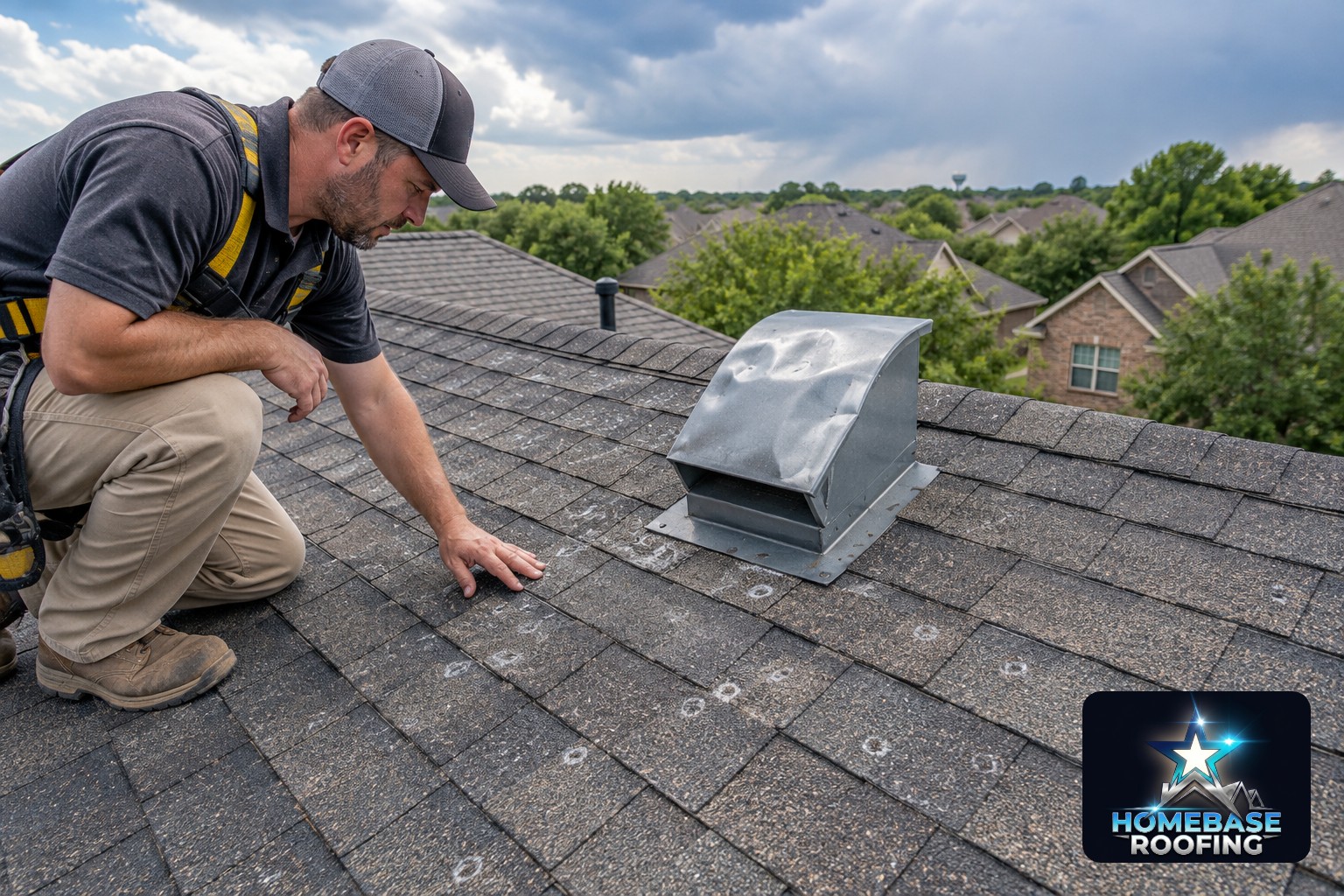
If you already suspect storm damage, start with a proper hail damage roof inspection and repair assessment. Small hail marks are easy to miss from the ground, and climbing onto a wet or steep roof is not worth the risk.
How do Class 4 shingles compare with standard shingles?
Class 4 shingles offer better tested impact resistance, but that is only one part of a complete roofing system. Underlayment, drip edge, flashing, ventilation, decking, and workmanship still matter.
| Question | Standard asphalt shingles | Class 4 impact-resistant shingles | |---|---|---| | Impact test | May have a lower rating or no UL 2218 rating | Passed the Class 4 level of UL 2218 | | Hail protection | Can be more vulnerable to cracking and bruising | Designed to resist certain impacts more effectively | | Hail-proof | No | No | | Insurance discount | Usually not based on impact resistance | May qualify, depending on the insurer and policy | | Material cost | Generally lower | Generally higher; the difference depends on product and roof design | | Best fit | Lower-risk situations or budget-led projects | Homeowners seeking added hail resistance in North Texas |
The right choice depends on your roof, your plans for the home, and the actual insurance savings available to you. A higher material cost may make sense if the product fits your home and policy, but the Class 4 label should not be the only reason you choose a shingle.
Do Texas insurers give a discount for impact-resistant shingles?
Some Texas insurers offer a premium discount for qualifying impact-resistant roofing. Others offer a smaller discount, impose different requirements, or provide no discount at all.
The discount is not automatic. Your insurer may require proof of the exact product, its impact rating, the installation date, and a signed roofing certification form. Requirements can change, so check your current policy rather than relying on an old quote or a neighbor’s experience.
The Texas Department of Insurance home insurance guidance is a useful starting point, but your carrier must explain what applies to your policy.
How should you check for a Texas insurance discount?
Get the answer in writing before selecting the shingle. That helps you compare the added roofing cost with the actual policy savings.
- Ask your insurer whether it offers a discount for UL 2218 Class 4 shingles.
- Request its list of qualifying products and required documents.
- Ask how the discount changes your annual premium.
- Ask whether accepting the discount adds a cosmetic damage exclusion.
- Confirm whether the discount continues at renewal.
- Keep the final invoice, product information, and installation certification.
A cosmetic damage exclusion deserves close attention. It may limit coverage when hail dents or marks the roof but does not create a functional leak. Ask your insurance agent to explain that language in plain terms before you agree to it.
If your current roof was hit by a recent storm, Homebase Roofing can document visible damage, provide photos and measurements, and meet your adjuster at the property. Our roof insurance claims guidance explains what we can provide without promising an insurance outcome.
Are Class 4 shingles worth it in DFW?
They can be worth considering if you plan to stay in your home, want better impact resistance, and receive a meaningful insurance discount. The decision still depends on the product, roof complexity, ventilation, decking, and policy terms.
North Texas roofs face more than hail. Long summer heat can age shingles. Strong winds test ridge caps and perimeter edges. Expansive clay soil can move a home over time, although an impact-resistant shingle does not address structural movement.
The NOAA Storm Events Database lets you review documented hail and wind events by location and date. It can provide useful background, but it does not prove that your specific roof was damaged.
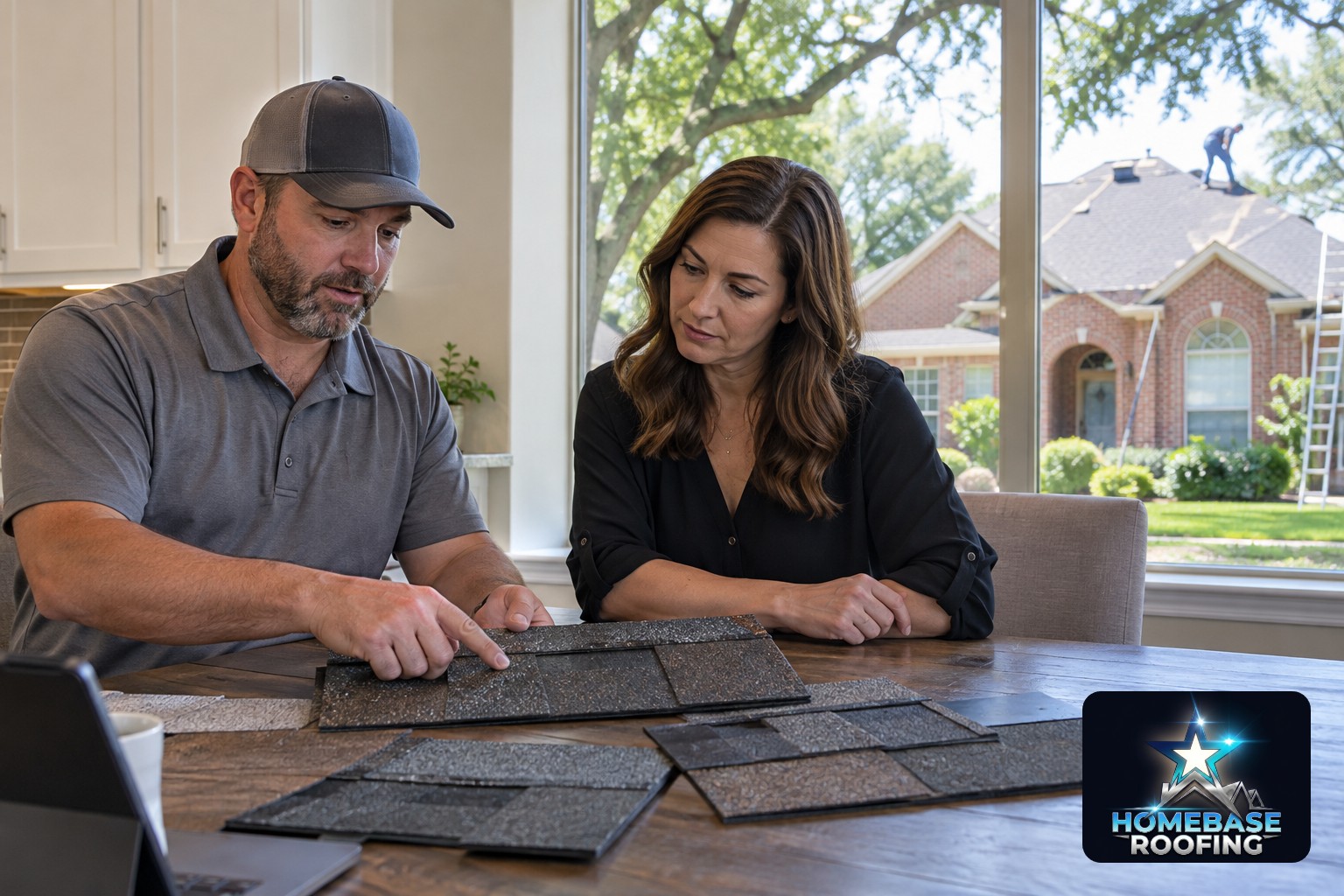
If replacement is already the right step, review the full roof system rather than choosing from a sample board alone. Our guide to roof replacement in Plano covers tear-off, decking, underlayment, ventilation, flashing, and the details that affect long-term performance.
What should you ask before buying Class 4 shingles?
Ask for specifics about the product, installation, warranty, and insurance requirements. A trustworthy answer should be clear and written down.
Use this checklist:
- What is the exact manufacturer and product name?
- Is that specific product rated Class 4 under UL 2218?
- Does the rating apply to the complete shingle or only a reinforced component?
- What does the manufacturer’s warranty cover and exclude?
- Is your existing decking flat, dry, and suitable for installation?
- How will valleys, pipe boots, ridge vents, and wall flashing be handled?
- Does your insurer recognize this product for a discount?
- Will the discount change cosmetic damage coverage?
Frequently asked questions
What is a Class 4 shingle?
A Class 4 shingle is a roofing product that passed the highest level of the UL 2218 impact-resistance test. The rating indicates better tested impact performance, not immunity from hail damage.
Can Class 4 shingles be damaged by hail?
Yes. Large hail, wind-driven impacts, repeated strikes, aging, and installation problems can damage Class 4 shingles. They reduce risk but do not create a hail-proof roof.
Do all Texas insurance companies discount Class 4 shingles?
No. Discounts and qualification rules vary by insurer and policy. Ask your carrier for written requirements and review any cosmetic damage exclusion before choosing a product.
How can I tell whether my shingles are Class 4?
Check your roofing contract, invoice, product packaging, or manufacturer documentation. Appearance alone is not reliable because standard and impact-resistant shingles can look nearly identical.
Should I replace a good roof just to get an insurance discount?
Usually, an insurance discount alone is not enough reason to replace a sound roof. Compare the remaining roof life, replacement cost, product benefits, and confirmed policy savings first.
What should you do next?
If your roof was recently hit by hail or you are considering Class 4 impact-resistant shingles, start with a clear look at what you already have. Homebase Roofing will inspect the shingles, soft metals, flashing, vents, and accessible decking conditions, then explain what we find.
Get a Free Roof Inspection. No pushy sales. If your roof’s fine, we’ll tell you and leave.

Written by
Giovanni EsotoSEO Specialist & Content Writer
Five years of SEO and content experience focused on useful, locally relevant homeowner guidance.
LinkedInReviewed for roofing accuracy by
Curtis DunnOwner & Roofing Subject Matter Expert
Homebase Roofing reviews technical roofing details for accuracy and North Texas relevance. This content is not legal, engineering, or insurance advice.
Storm season doesn't wait. Neither should your roof.
Free inspection, written report, honest verdict. We'll call you within 1 business hour — no obligation, no pressure.
No pushy sales. If your roof's fine, we'll tell you and leave.
- Licensed & insured
- 5.0 on Google
- 1-hour callback