Commercial roofing
Commercial roofing in Plano, TX — flat, low-slope, and metal.
TPO, modified bitumen, EPDM, and standing seam for the warehouses, retail centers, and office buildings that keep Plano running.
Quick answer
Who is a commercial and flat roofer in Plano, TX?
Homebase Roofing installs, repairs, and replaces commercial and flat roofs — TPO, modified bitumen, EPDM, and standing seam metal — for warehouses, retail centers, offices, and residential flat add-ons across Plano, Richardson, and North Dallas. Call (945) 298-3335 for a free roof assessment.
- Systems
- TPO, mod-bit, EPDM, metal
- Service area
- Plano & North Dallas
- Emergencies
- Same-day tarping
Last reviewed by Curtis Dunn, owner & roofing reviewer
Homebase's commercial division handles buildings from single-tenant strip centers to 100,000+ sq ft warehouses across Plano, Allen, Frisco, and Richardson. We work directly with property owners, facility managers, and general contractors.
What commercial roof systems do we install?
Short answer: We install TPO, modified bitumen, EPDM, and metal roofs on commercial and flat-roof buildings.
- TPO single-ply membrane — the North Texas standard. Reflective white membrane cuts cooling costs. 20-year manufacturer warranty.
- Modified bitumen (mod-bit) — durable multi-ply built-up system for high-traffic commercial roofs.
- EPDM rubber — cost-effective option for larger low-slope roofs.
- Standing seam metal — 40+ year life for signature commercial architecture.
- Roof coatings and restoration — extend the life of an existing membrane by 10+ years for a fraction of a replacement.
What commercial roofing services do we offer?
Short answer: We offer flat roof repair, replacement, leak tracing, inspections, and maintenance for commercial buildings across North Texas.
- New construction and re-roof
- Storm damage response and insurance claim support
- Leak diagnosis and repair
- Preventative maintenance programs
- Roof asset management for property portfolios
Where do flat roofs usually fail first?
Short answer: Flat roofs usually fail first at the parapet walls and corners, where the membrane, flashing, and sealant meet.
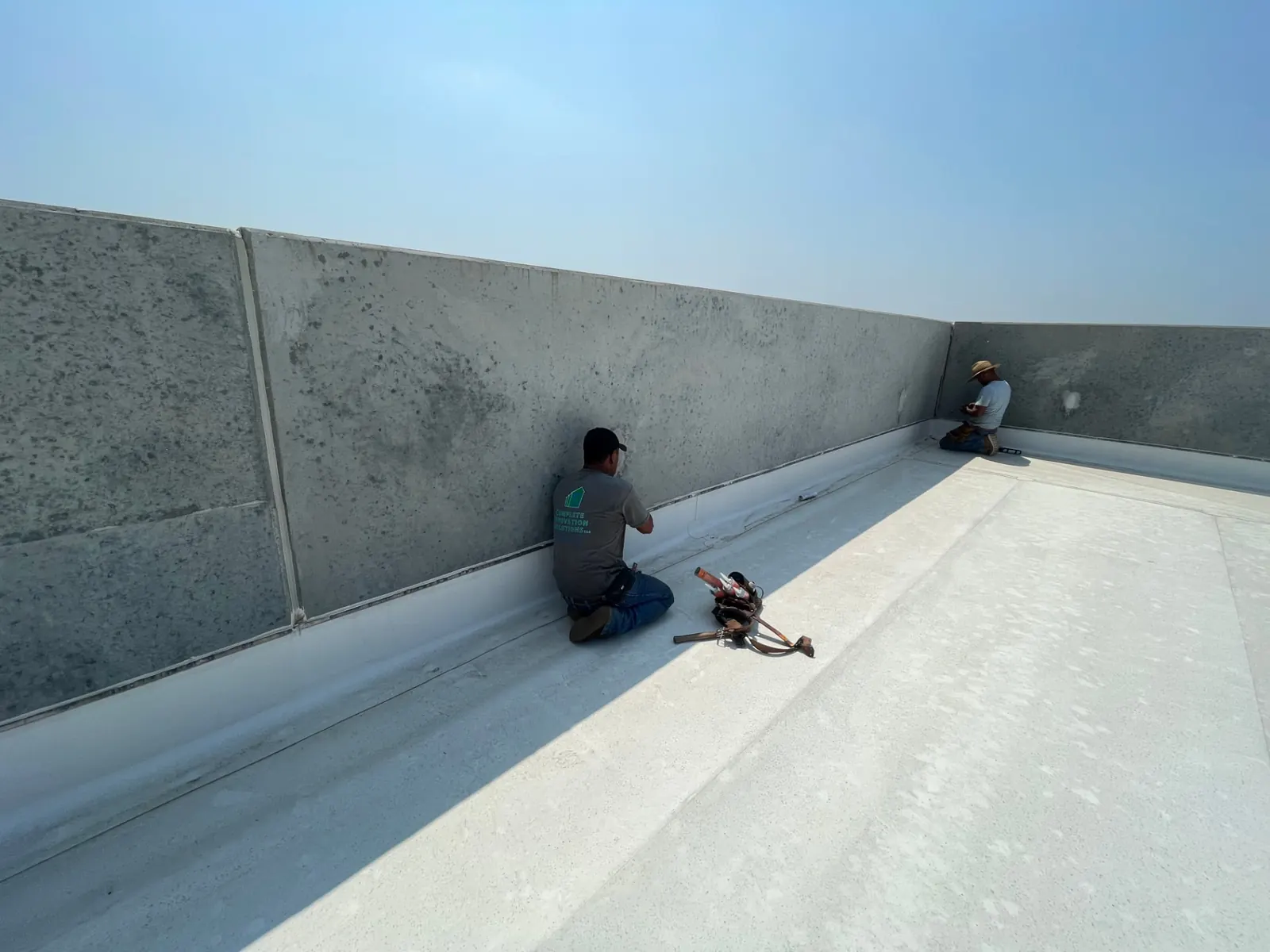
Ask a facility manager where their last leak came from and you'll rarely hear "the middle of the roof." Low-slope membrane fails at the edges — at the parapet walls, the inside corners, the curbs, and the penetrations. That's where water gets pushed and held, and it's where a rushed crew saves an hour. So that's where we spend our time.
How we detail a parapet, step by step
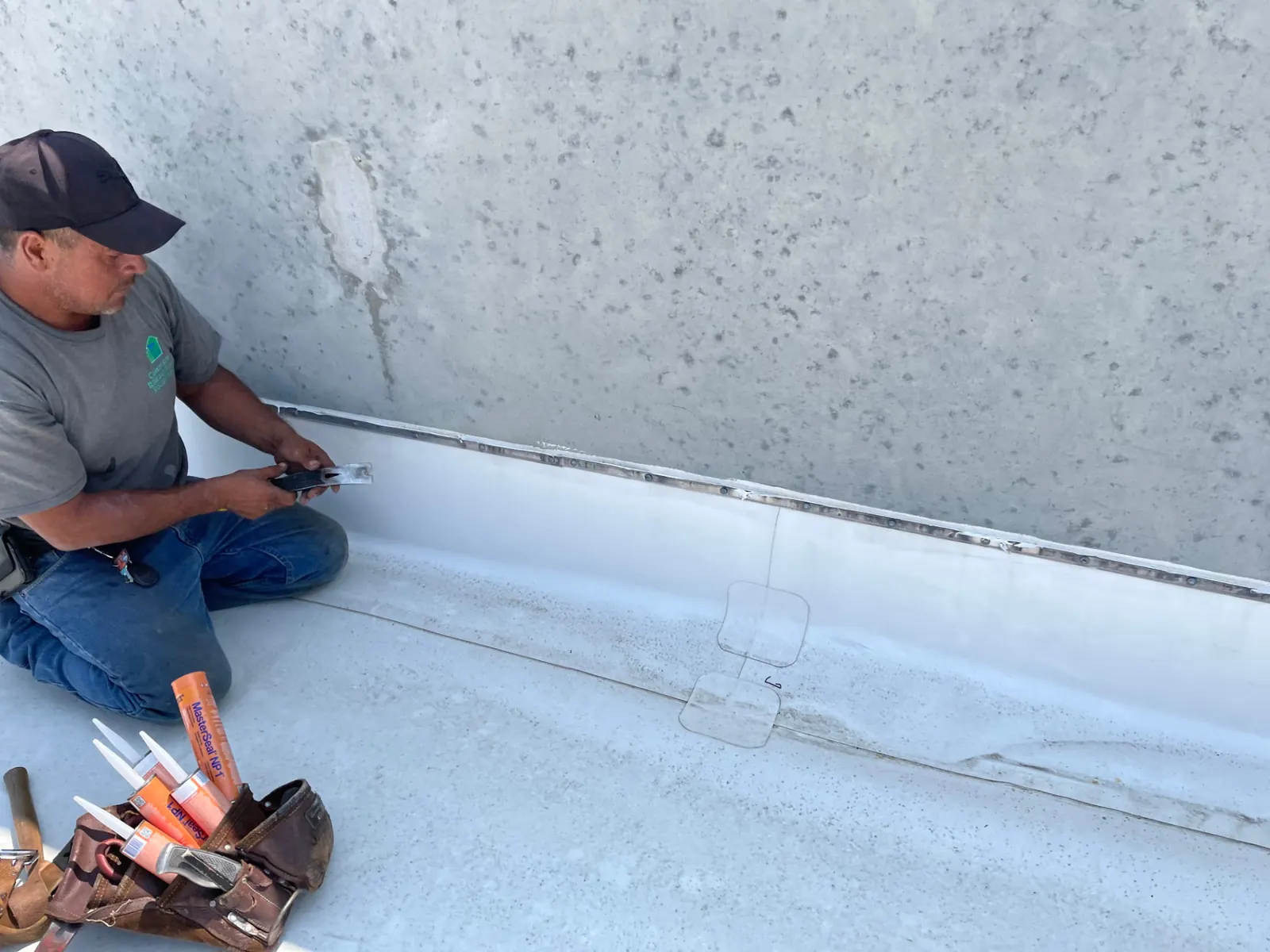
- Membrane runs up the wall, not just to it. The single-ply is carried up the vertical face rather than cut at the base, so the transition is a continuous surface instead of a seam sitting in standing water.
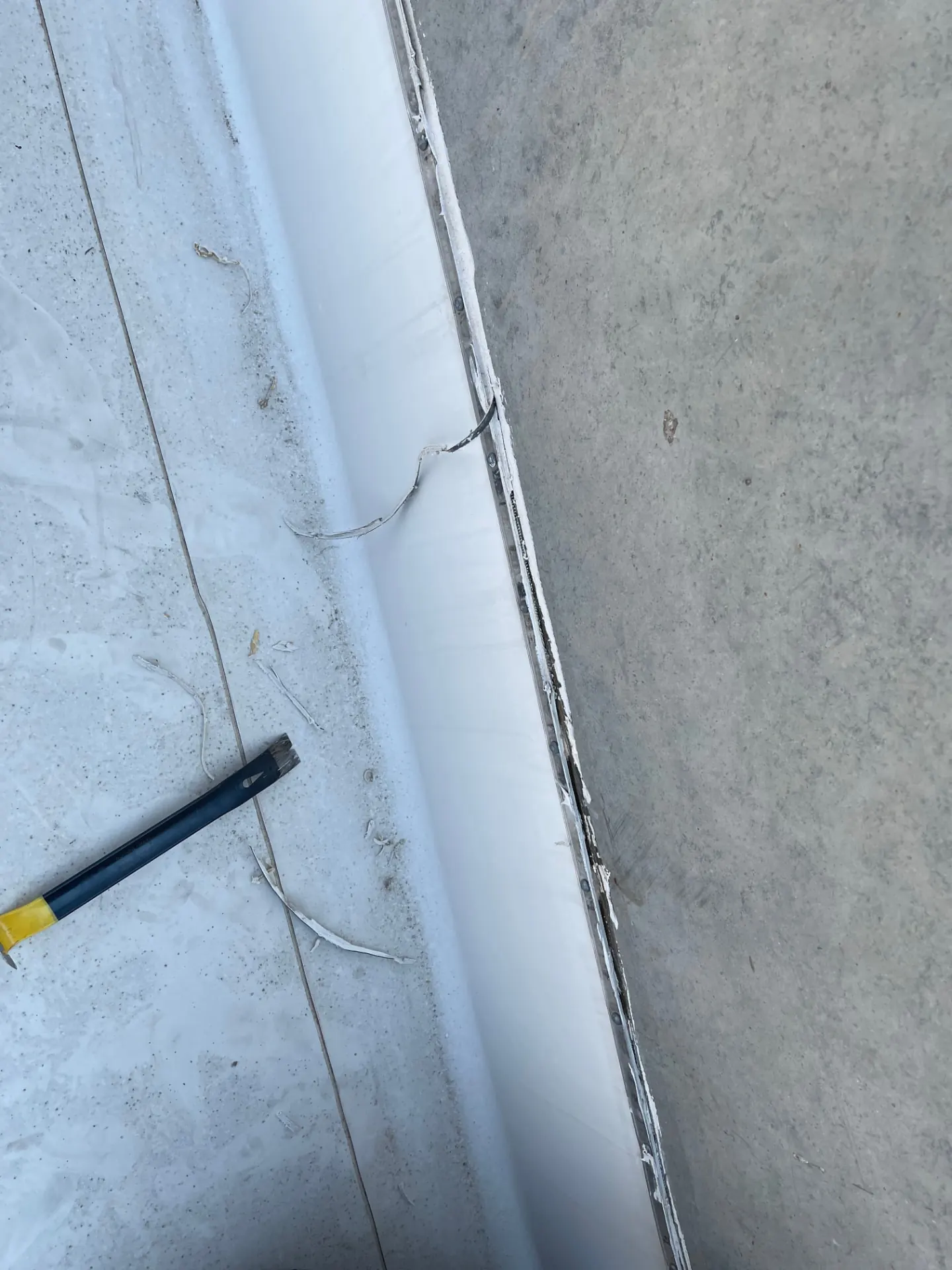
- Termination bar and fastener line. A bar is fastened along the top of the membrane at even spacing to hold it mechanically against the wall. Consistent spacing matters — a bar that pulls away in one spot is a slow leak nobody sees for two years.
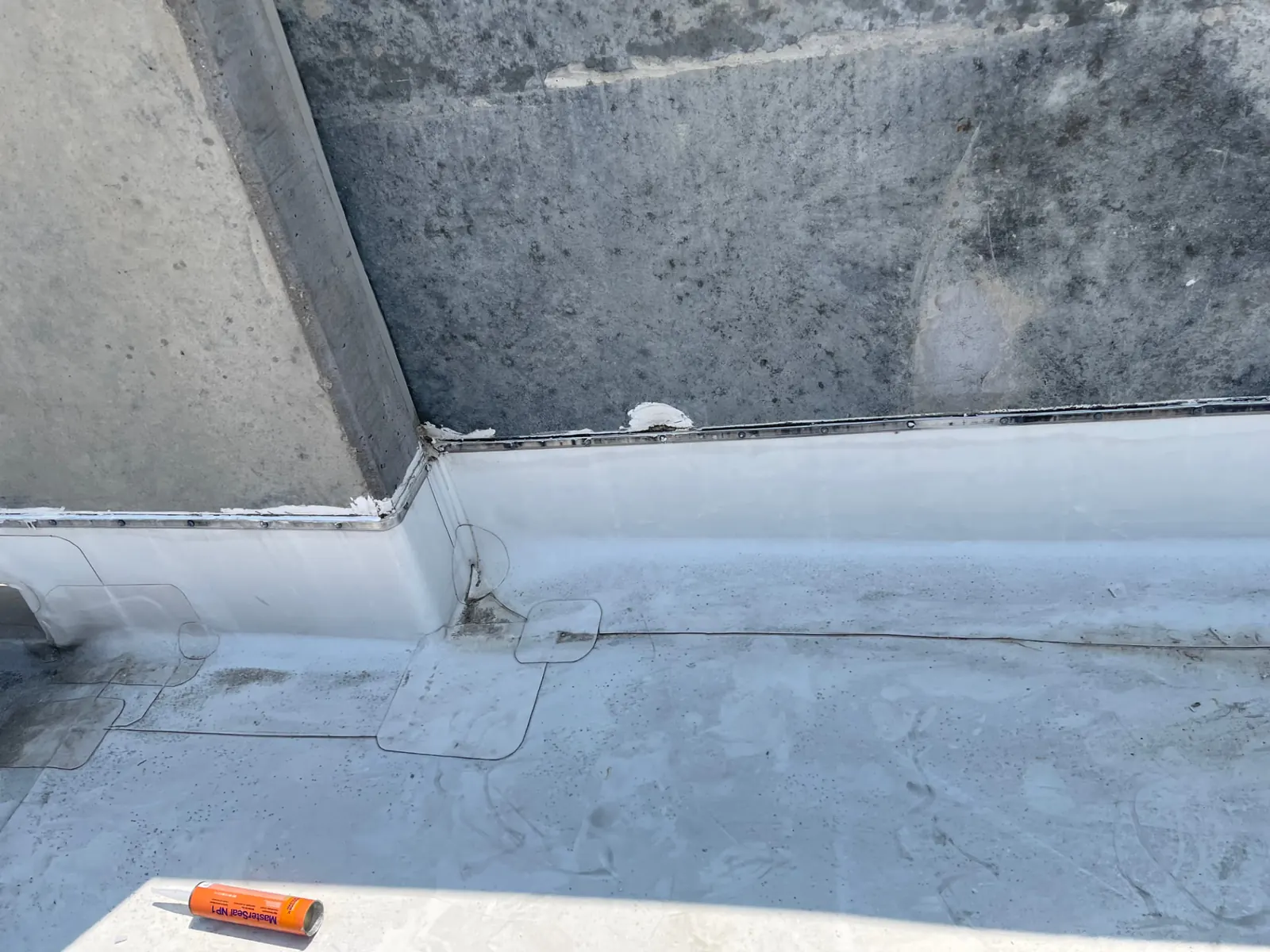
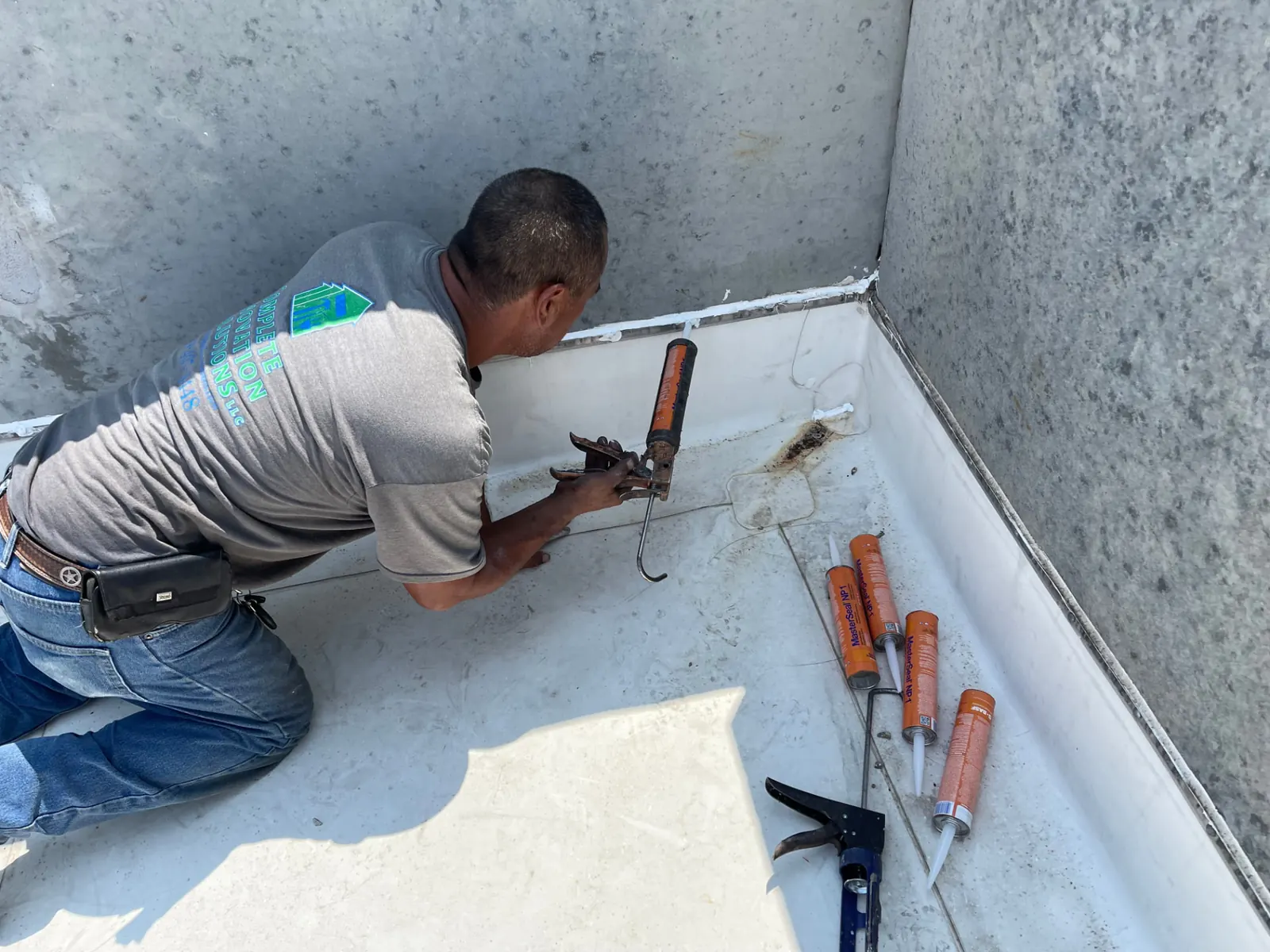
- Target patches at inside corners. Corners can't be folded flat, so they get purpose-cut patches heat- or adhesive-set over the transition. This is the single most common thing we find missing on roofs we're called to repair.
- Sealant along the top edge. A continuous bead over the bar and under the counterflashing closes the last path water has into the wall assembly. We use a polyurethane sealant rated for movement and UV, tooled by hand rather than left as a raw bead.
- Water test and photo record. Before we call it done, the detail gets checked and photographed. Property managers get the photos with the closeout so there's a record of what's behind the metal.
What this means for a building owner
Most commercial roof spend is wasted on the wrong thing. Owners get quoted a full tear-off when the field membrane still has ten years in it and the actual problem is forty linear feet of failed wall detail. On an inspection we map the roof by zone — field, edges, corners, curbs, penetrations — and tell you which of those is actually costing you. Sometimes that's a maintenance visit. Sometimes it's a recover. Occasionally it's a replacement, and we'll show you the photos that prove it.
Frequently asked commercial questions
Need a commercial roof partner?
Same-day site visits for property managers and GCs.
No pushy sales. If your roof's fine, we'll tell you and leave.
- Licensed & insured
- 5.0 on Google
- 1-hour callback