
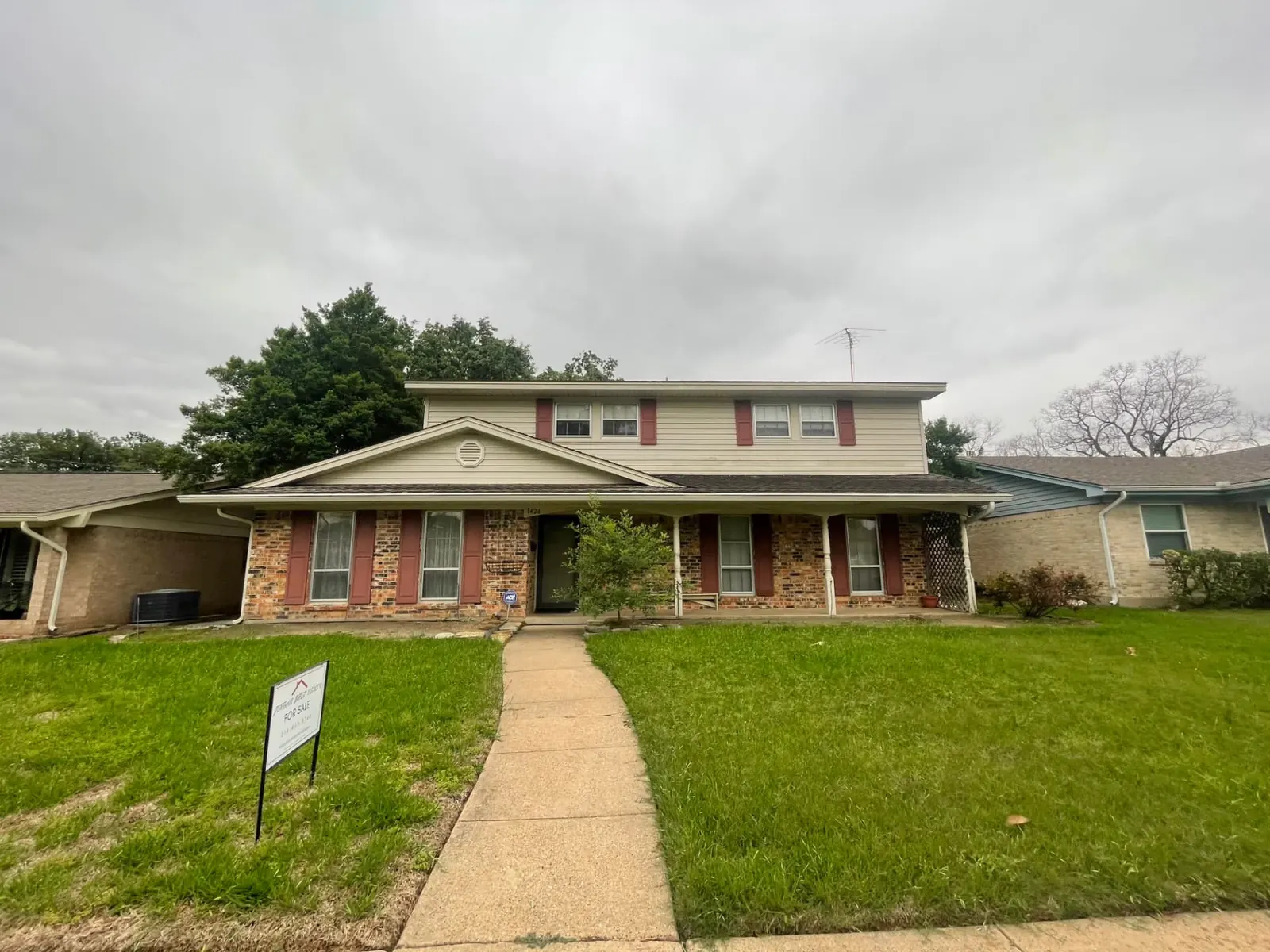
Storm damage
Storm damage roof repair in North Texas.
Wind, hail, driving rain, tree limbs — we handle the roof and the insurance claim. Same-day tarping when you need it.
Storm damage roof repair means two jobs, not one: stopping the water today and proving the loss to your insurer tomorrow. Homebase handles both — from a tarp on a Sunday night to the final shingle on the ridge cap, with the photo record your adjuster needs sitting in between.
North Texas storm season doesn't take a break. Between March and October, most Collin County homes see at least one wind or hail event that touches the roof. Our office is on Alma Drive in Plano, so Plano, Allen, Frisco, McKinney, Murphy, Wylie, Parker, and Richardson are all inside a short drive when the sky turns.
What does storm damage look like on a North Texas roof?
Short answer: Storm damage usually shows up as missing or creased shingles, lifted edges, dented vents and gutters, granules washing out of downspouts, and new ceiling stains. Much of it can't be seen from the driveway, so a roof-level inspection is the only way to be sure.
Very little storm damage looks like a hole in the roof. What we usually find is subtle, and that is exactly why it goes unclaimed until the ceiling stains.
- Wind damage — shingles lifted at the bottom edge and set back down. The sealant strip underneath is broken, so the shingle flaps every time the wind blows and lets rain under it. Nothing looks wrong from the driveway.
- Creased shingles — a chalk-line crease across a tab where wind folded it back. That crease is a future leak even though the shingle never left the roof.
- Hail bruising — soft dark spots where granules were knocked off and the mat underneath took the hit. See the hail damage roof repair page for the photo walkthrough.
- Tree-limb strikes — punctures, cracked decking, and torn shingle courses. Emergency tarping first, then the structural repair.
- Driving-rain leaks — wind-driven rain finds weak chimney flashing, sidewall step flashing, and dried-out pipe boots. We chase the entry point, not the ceiling stain. That work lives on the roof leak repair page.
- Ice and freeze damage — Texas ice storms crack pipe boots and lift shingles when trapped water refreezes and expands.
- Collateral damage — dented gutters, downspouts, window screens, fence caps, AC condenser fins, and mailboxes. These are your best ground-level evidence that a storm hit this address, and adjusters look for them.
Is it wind, hail, or debris damage, and why does it matter?
Short answer: Wind lifts and creases shingles, hail bruises and cracks them, and debris punctures or scrapes them. Insurers document each one differently, so naming the right cause helps your claim get approved and paid correctly.
Your policy pays on all three, but the inspection and the paperwork are different, and calling it wrong is how claims get underpaid.
- Wind shows up directionally. One or two slopes facing the storm take almost all of it, usually the west and south faces in Collin County. A wind claim often settles as a slope repair rather than a full replacement, so the slope count in the scope is the number that matters.
- Hail shows up everywhere at once, randomly scattered, with soft metals dented in the same pattern. Adjusters test it with a marked 10-by-10-foot square per slope and count impacts. Pass the threshold and the slope is approved.
- Debris and limbs are a single point of impact with a clear cause. These are the fastest approvals and the ones most likely to need decking, not just shingles.
We photograph and label each type separately in the report so nothing gets folded into "wear and tear" by default.
What should you do in the first 24 hours after a storm?
Short answer: Stay off the roof, photograph damage from the ground, stop any active leak with a bucket or tarp, and book a free inspection before you file a claim or sign anything.
- Take photos from the ground. Gutters, downspouts, fence tops, siding, cars, screens. Time-stamped, before anything gets cleaned up.
- Cover interior water damage — buckets, plastic sheeting, move furniture off wet carpet.
- Write down the date and time of the storm. Your claim is tied to a date of loss, and guessing it later weakens the file.
- Call us for a free inspection — book a free roof inspection or dial (945) 298-3335. We tarp same-day for active leaks; that is the emergency roof repair side of what we do.
- Do not sign anything on your porch from a roofer you've never heard of. Storm chasers work fast on purpose, and an "authorization to inspect" is often a contract.
- Wait to file until you have a written inspection report in hand, so the claim opens with evidence attached.
How does a storm damage inspection work?
Short answer: We walk every slope, photograph and mark the damage, check the attic for leaks, and give you a written report with photos. It's free, with no obligation.
It takes about 45 minutes and you get a written report either way — including "your roof is fine," which we say more often than homeowners expect.
- Ground and perimeter walk. Gutters, soft metals, fences, screens, and the collateral evidence that dates the storm.
- On-roof inspection, slope by slope. Every slope gets its own photo set, a chalked test square, and an impact count.
- Attic and interior check where there is any sign of water — decking stains, wet insulation, daylight at a penetration.
- Written report with photos and a plain-English verdict: repair, replace, or leave it alone.
- Claim decision together. If the damage will not clear your deductible, we tell you not to file.
Will insurance cover storm damage to my roof?
Short answer: Most Texas homeowner policies cover sudden wind and hail damage, minus your deductible. We document the damage and meet your adjuster on the roof so nothing gets missed.
Storm claims live and die on documentation. We photograph every square, mark every impact with chalk before shooting the photos, and give the adjuster a written scope in the language their software expects. We meet the adjuster on the roof rather than leaving them to it, and when the initial scope comes back short we submit supplements with code references and photos until the settlement covers the actual work. See the roof insurance claim page for the step-by-step walkthrough, and the Texas claim guide if you want to read ahead.
What if insurance won't cover the storm damage?
Short answer: You still have options: a targeted repair instead of a full replacement, a re-inspection request, or financing for a replacement. We'll tell you honestly which makes sense.
Sometimes the damage is real but does not clear the deductible, or the roof is simply old. Then it becomes a straightforward purchase, and we publish our numbers rather than making you ask — see roof replacement cost in Texas for 2026. Roof financing covers the out-of-pocket route when a claim isn't in play.
Where do we repair storm damage in North Texas?
Short answer: We repair storm damage across Plano, Allen, Frisco, McKinney, Murphy, Wylie, Parker, Richardson, and North Dallas.
We restore storm-damaged roofs in Plano, Allen, Frisco, McKinney, Murphy, Wylie, Parker, and Richardson. Full list on the service areas page.
Frequently asked storm damage questions
Storm season doesn't wait. Neither should your roof.
Free inspection, written report, honest verdict. We'll call you within 1 business hour — no obligation, no pressure.
No pushy sales. If your roof's fine, we'll tell you and leave.
- Licensed & insured
- 5.0 on Google
- 1-hour callback