
October 2026
DFW Hail Season: When It Hits and How to Protect Your Roof
When DFW hail season peaks, which hail sizes damage roofs, and a simple prep list for homeowners.
What should you do after a Dallas hail storm?
Did last night's Dallas hail storm leave dents in your gutters or a water stain on the ceiling? You may be worried about damage you cannot see. Check for leaks, photograph visible damage from the ground, and schedule a roof inspection after hail before deciding whether repairs or an insurance claim are needed.
Key takeaways:
- Dallas hail season is usually most active during spring.
- Hail around one inch or larger deserves attention, but smaller hail can affect an older roof.
- You do not need to climb onto your roof to check it.
- An inspection can separate real damage from normal shingle wear.
When is hail season in Dallas?
Hail season in Dallas and across North Texas is most active from March through May. Strong storms can still produce hail in summer or fall, so the calendar alone cannot tell you whether your home is safe.
Spring brings warm, humid air up from the Gulf while cooler air moves across North Texas. That mix can produce severe thunderstorms from Plano and Richardson through Dallas, Frisco, Allen, McKinney, Murphy, Parker, and Wylie.
Summer heat does not end the risk. It can also make existing shingle damage worse by drying out exposed asphalt after hail knocks away protective granules. If you are unsure whether hail reached your neighborhood, check the NOAA Storm Events Database for reported events near your home.
What size hail damages a roof?
Hail around one inch in diameter, about the size of a quarter, can damage asphalt shingles. Smaller hail may also cause problems when shingles are older, brittle from North Texas heat, or struck by wind-driven hail at an angle.
Size is only part of the picture. Roof pitch, shingle condition, wind speed, and the length of the storm all matter. A newer impact-resistant shingle may respond differently than an older three-tab roof.
| Hail size | What it may mean for your roof | Practical next step | |---|---|---| | Pea to dime size | Usually lower risk, but older shingles or soft metal may show marks | Check gutters, vents, and downspouts from the ground | | Quarter size | Can bruise shingles and loosen protective granules | Schedule a professional inspection if it struck your property | | Ping-pong-ball size | Greater chance of shingle, flashing, vent, and gutter damage | Arrange an inspection promptly and photograph visible damage | | Golf-ball size or larger | Can cause significant damage, especially with strong wind | Stay off the roof and have the full roofing system checked |
A hail bruise is a softened spot where the impact damaged the asphalt beneath the shingle surface. It may not look like a hole. That is why roof damage can be easy to miss from the driveway.
Should I inspect my roof after every storm?
You do not need a professional roof inspection after every ordinary rainstorm. You should arrange one when hail reached your property, strong winds lifted shingles, tree limbs hit the roof, or you notice signs of damage inside or outside your home.
A roof inspection after hail makes sense when you find:
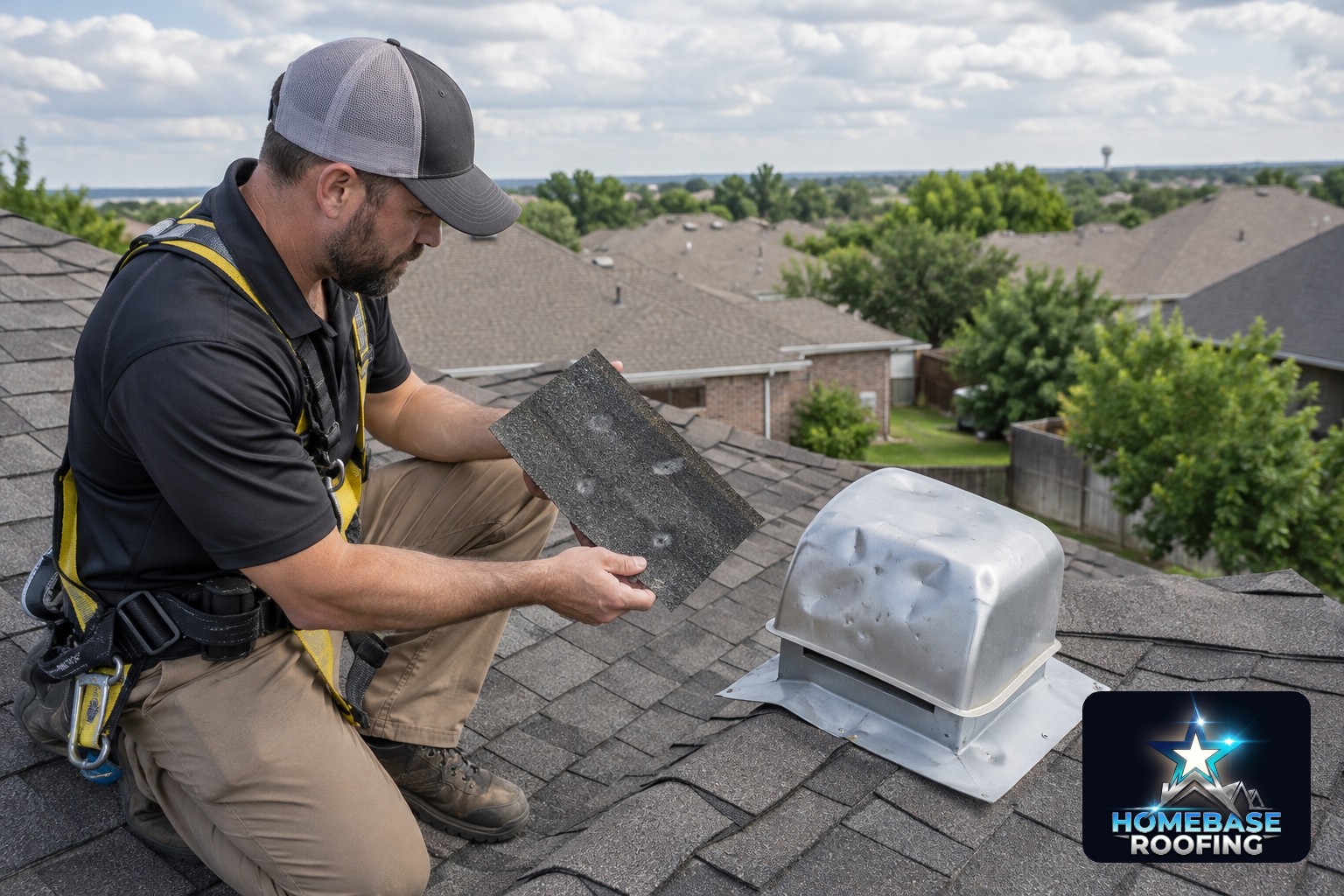
- Dents in gutters, downspouts, vents, or an outdoor air-conditioning unit
- Shingle granules collecting near downspout exits
- Cracked, missing, or lifted shingles
- Damage to window screens, fences, patio furniture, or vehicles
- A new ceiling stain or damp attic insulation
- Neighbors replacing roofs after the same storm
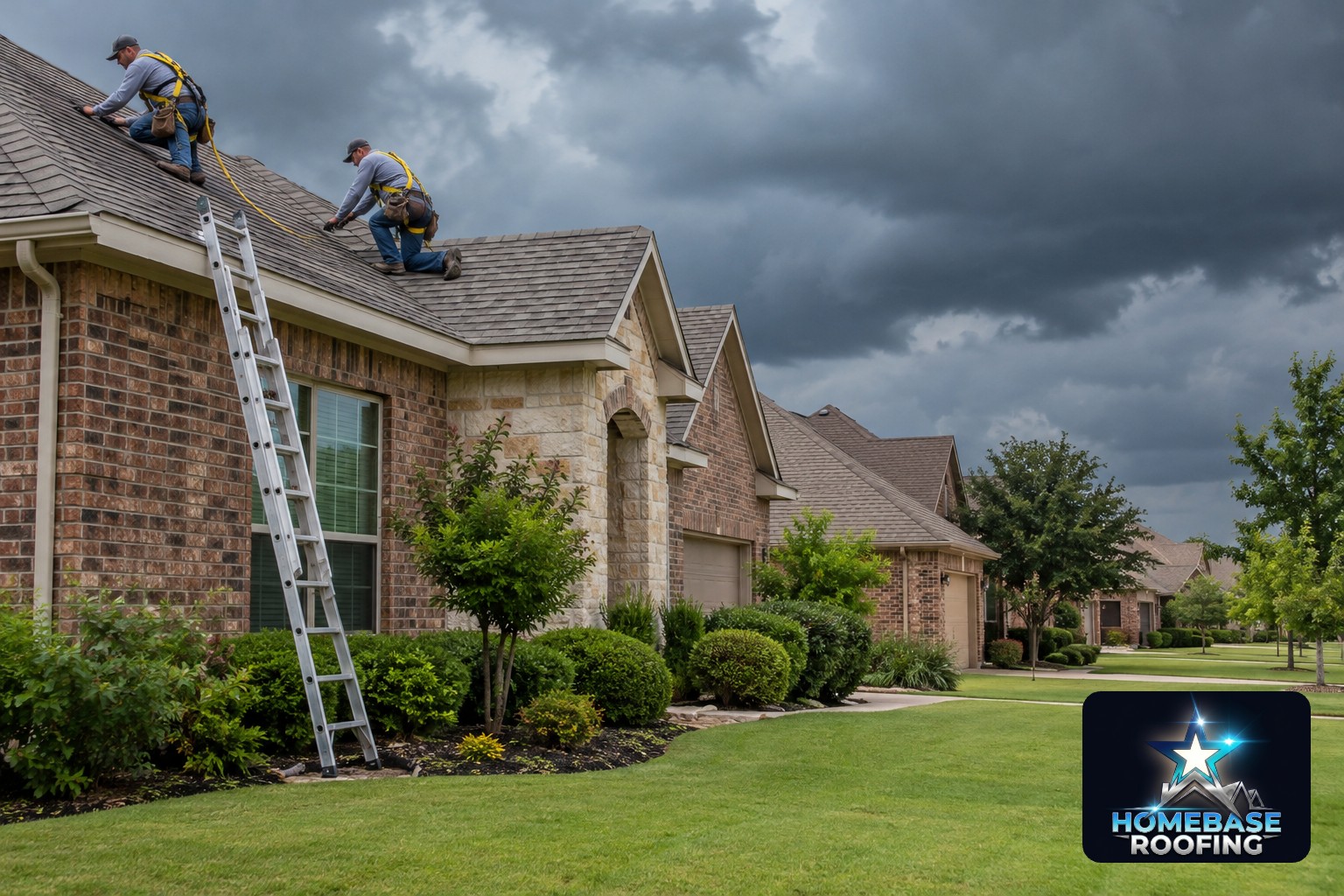
Do not climb up for a closer look. Wet shingles, steep pitches, and alley-access rooflines common in Dallas-area neighborhoods create real fall hazards. A roofer can inspect the surface safely and document what is found.
What does a roof inspection after hail include?
A proper hail inspection covers the whole roofing system, not just a few shingles near the ladder. The roofer should check each roof slope, soft metals, flashing, penetrations, drainage, and the attic when interior damage is possible.
The inspection should include:
- Shingles: Checking for hail bruising, cracks, missing granules, and wind uplift.
- Soft metals: Looking at vents, flashing, gutters, and downspouts for impact marks that help show hail direction and size.
- Roof openings: Examining pipe boots, skylights, chimneys, and exhaust vents where water commonly enters.
- Decking and attic: Checking for moisture, daylight, sagging, or damaged decking when conditions call for it.
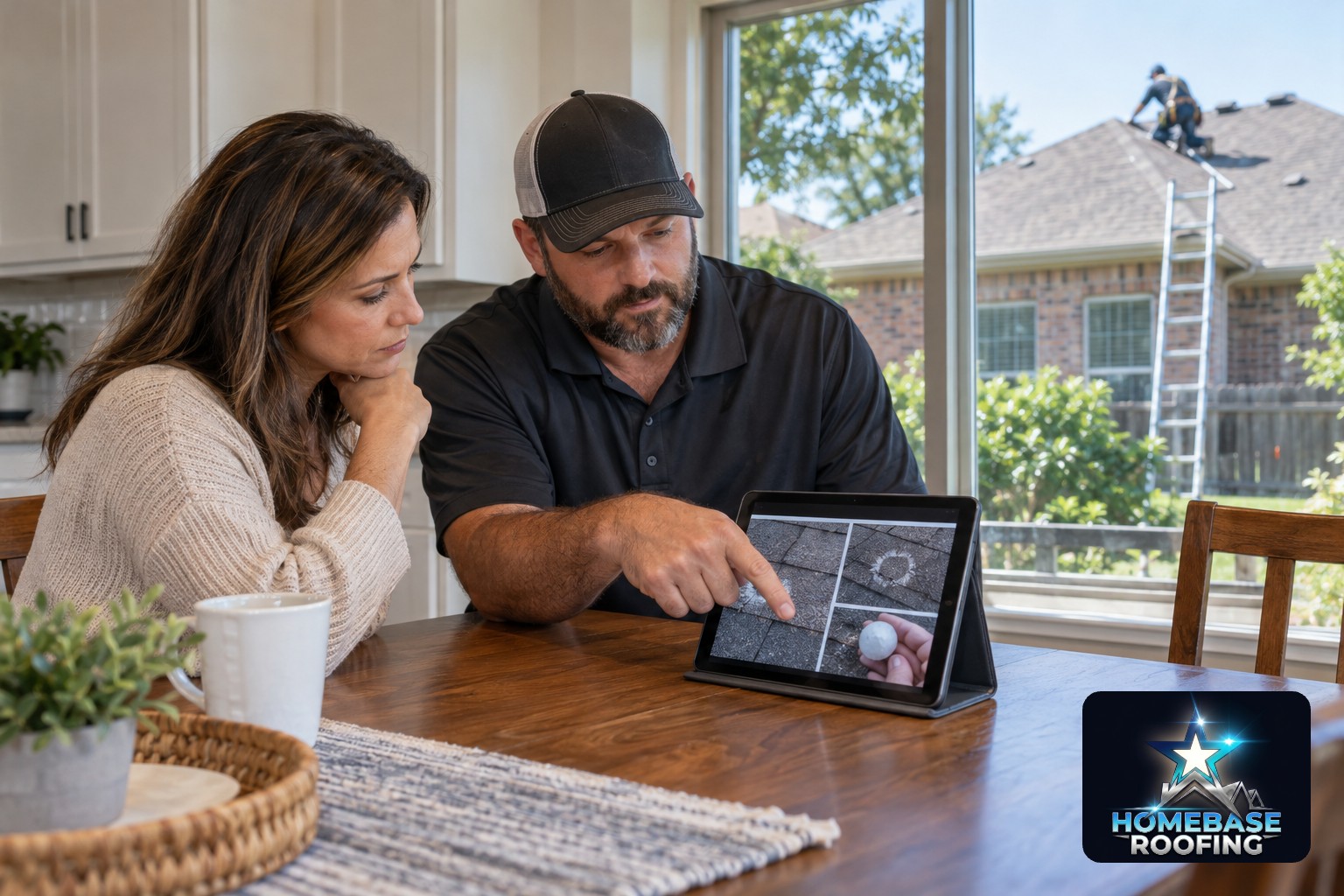
- Photo documentation: Recording the location and type of damage so you can understand the findings clearly.
Some Plano and Dallas homes built from the 1970s through the 1990s have multiple roof additions, low-slope sections, or radiant barrier decking. Those details can hide leaks or make attic moisture harder to trace. Your inspection should account for the way your home was built.
What should I do immediately after hail hits my home?
Start with safety and documentation. You do not need to make a claim or sign a roofing contract before you know what happened.
- Check inside your home. Look at ceilings, closets, the attic, and areas around chimneys or vents for active water.
- Protect the interior if water is entering. Move furniture and place a container under the drip. Emergency tarping may be appropriate when the roof is open to the weather.
- Photograph visible damage. Take pictures of hail on the ground, dents, damaged screens, fallen branches, and interior stains. Stay at ground level.
- Write down the storm date. The date matters if you later contact your insurance carrier.
- Schedule an inspection. Ask for clear photos and a plain explanation of whether the roof needs repair, replacement, or no work.
- Review your policy and deadlines. Texas insurers generally allow one year from the storm date to file, but policy terms vary. The Texas Department of Insurance storm guidance can help you understand the next steps.
For a fuller checklist, see what to do after a hailstorm.
Can a roof have hail damage without leaking?
Yes. Hail can bruise shingles or remove granules without causing an immediate leak. Water may not enter until later, after summer heat, wind, and repeated rain wear down the damaged area.
That does not mean every hail mark requires a replacement. Damage may be limited to a repairable vent, flashing section, or small roof area. An honest inspection should explain the difference and show you the evidence.
If damage is confirmed, learn how hail damage roof repair addresses shingles, flashing, vents, and related components. Homeowners across the wider area can also review our Dallas-Fort Worth roofing services.
Do I need to contact insurance after every hailstorm?
No. First find out whether your roof has functional storm damage and review your policy. Filing without knowing the roof's condition can create confusion, while waiting too long may put you close to your policy deadline.
A roofer can document damage, provide photos and measurements, and meet your adjuster on the roof when requested. Your insurance carrier decides coverage. Before filing, read your deductible, exclusions, and storm-date requirements so you understand your part of the process.
Written by Giovanni Esoto, SEO Specialist & Content Writer. Roofing accuracy reviewed by Curtis Dunn, Owner & Roofing Subject Matter Expert.
Frequently asked questions
When is hail season in Dallas?
Dallas hail season is usually most active from March through May. Hail can still occur during summer and fall storms, so check conditions after any severe storm that crosses your neighborhood.
What size hail can damage asphalt shingles?
Hail around one inch, roughly quarter size, can damage asphalt shingles. Smaller hail may affect an older or brittle roof, while wind-driven hail can strike with more force.
Should I inspect my roof if I do not see a leak?
Yes, if hail reached your property or you see damage to gutters, vents, screens, or vehicles. Hail damage does not always cause an immediate leak.
Can I check hail damage from the ground?
You can safely look for dented gutters, damaged screens, loose shingles, and granules near downspouts. Do not climb onto the roof. A professional inspection is safer and more complete.
How soon should I schedule a roof inspection after hail?
Schedule it once the storm has passed and conditions are safe, especially if hail was quarter size or larger. Prompt documentation also helps you keep the storm date and damage details straight.
Would you like a clear answer about your roof?
If hail crossed your Dallas or North Texas neighborhood, Homebase Roofing can take a careful look and show you what we find. No pushy sales. If your roof's fine, we'll tell you and leave.
Get a Free Roof Inspection or call Homebase Roofing at (945) 298-3335.

Written by
Giovanni EsotoSEO Specialist & Content Writer
Five years of SEO and content experience focused on useful, locally relevant homeowner guidance.
LinkedInReviewed for roofing accuracy by
Curtis DunnOwner & Roofing Subject Matter Expert
Homebase Roofing reviews technical roofing details for accuracy and North Texas relevance. This content is not legal, engineering, or insurance advice.
Storm season doesn't wait. Neither should your roof.
Free inspection, written report, honest verdict. We'll call you within 1 business hour — no obligation, no pressure.
No pushy sales. If your roof's fine, we'll tell you and leave.
- Licensed & insured
- 5.0 on Google
- 1-hour callback