September 2026
Metal Roof Cost in North Texas: What Drives the Price
The factors that move metal roof pricing in DFW, and how it compares to shingles over time.
How much does a metal roof cost in DFW?
You are sitting at the kitchen table with a roof estimate in front of you, trying to decide whether metal is worth thousands more than shingles. Maybe last spring's hail exposed a problem, or your older Plano roof is simply reaching the point where another repair no longer makes sense.
For a practical starting point, an installed metal roof in DFW may run about $9 to $14 per square foot for an exposed-fastener system and $14 to $22 per square foot for standing seam. These are planning ranges, not a quote. Your final metal roof cost depends on the roof's size, pitch, access, decking, metal profile and flashing details.
On a roof with 2,500 square feet of actual roof surface, that works out to roughly:
- Exposed fastener: $22,500 to $35,000
- Standing seam: $35,000 to $55,000
Those totals can move higher if crews find damaged decking, complicated valleys or several layers that need to be torn off. A roof measurement and attic inspection are the only reliable ways to price your home.
What changes the price of a metal roof?
Two homes with the same floor plan can have very different roofing costs. Roofers price the roof surface, not the home's interior square footage. Pitch, overhangs, garages and covered patios all add area.
Here are the main cost drivers we look at in North Texas:
Roof shape and pitch
A simple gable roof is quicker to install than a roof with dormers, intersecting valleys and multiple levels. Steeper sections also require more safety equipment and slower installation.
Many Plano homes built from the 1970s through the 1990s have additions, patio covers or garage transitions that need custom flashing. Those details matter with metal because every panel and trim piece must direct water correctly.
Tear-off and decking
Your estimate should say whether the old roofing will be removed. Installing over an existing roof can hide soft decking, old flashing and ventilation problems.
If damaged decking is found after tear-off, it must be replaced before the metal goes down. Some North Texas homes have radiant barrier decking with a foil layer facing the attic. Replacement sheets should be compatible with the existing roof assembly.
Expansive clay soil can also cause a home to move over time. That does not automatically mean the roof has failed, but it makes careful inspection of decking, walls and roof-to-wall transitions important.
Access around your home
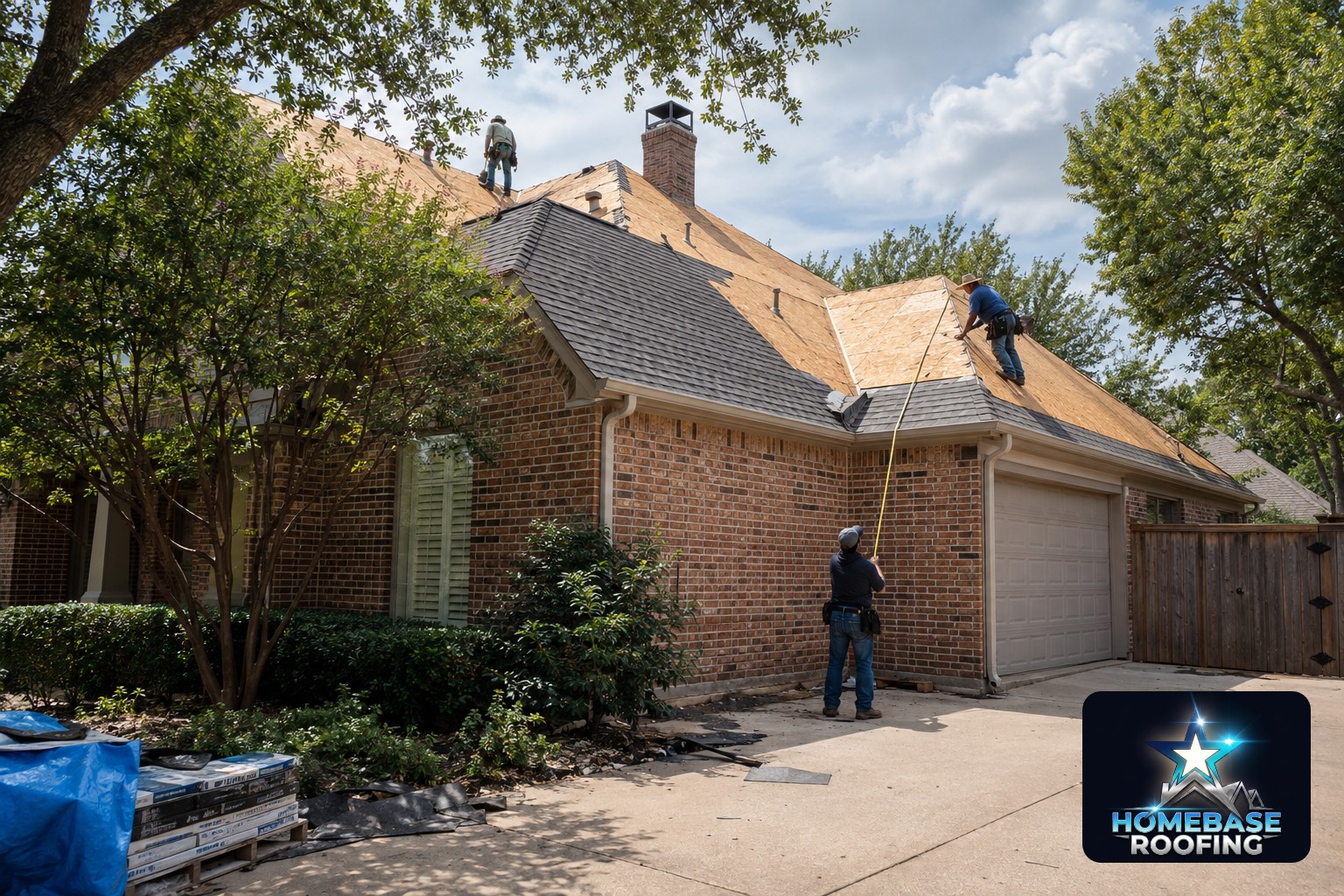
Alley-access rooflines are common in Plano, Richardson and parts of North Dallas. Tight driveways, rear garages, fences and mature trees can make material delivery and debris removal slower.
A clear driveway and open staging area usually make the project more efficient. Difficult access does not prevent the work, but it may affect labor and equipment costs.
Metal thickness, finish and trim
Metal panels come in different gauges, coatings and profiles. Thicker metal generally costs more. Premium finishes may also hold their color better under North Texas sun.
The visible panels are only part of the system. Your estimate should also address underlayment, drip edge, valleys, ridge ventilation, pipe boots, wall flashing and panel closures. Cheap trim or rushed flashing can erase the benefit of choosing a better panel.
Standing seam vs. exposed-fastener metal roofing
The biggest decision is usually whether to choose standing seam or exposed fastener. Both can work, but they are built differently.
Standing seam metal roofing
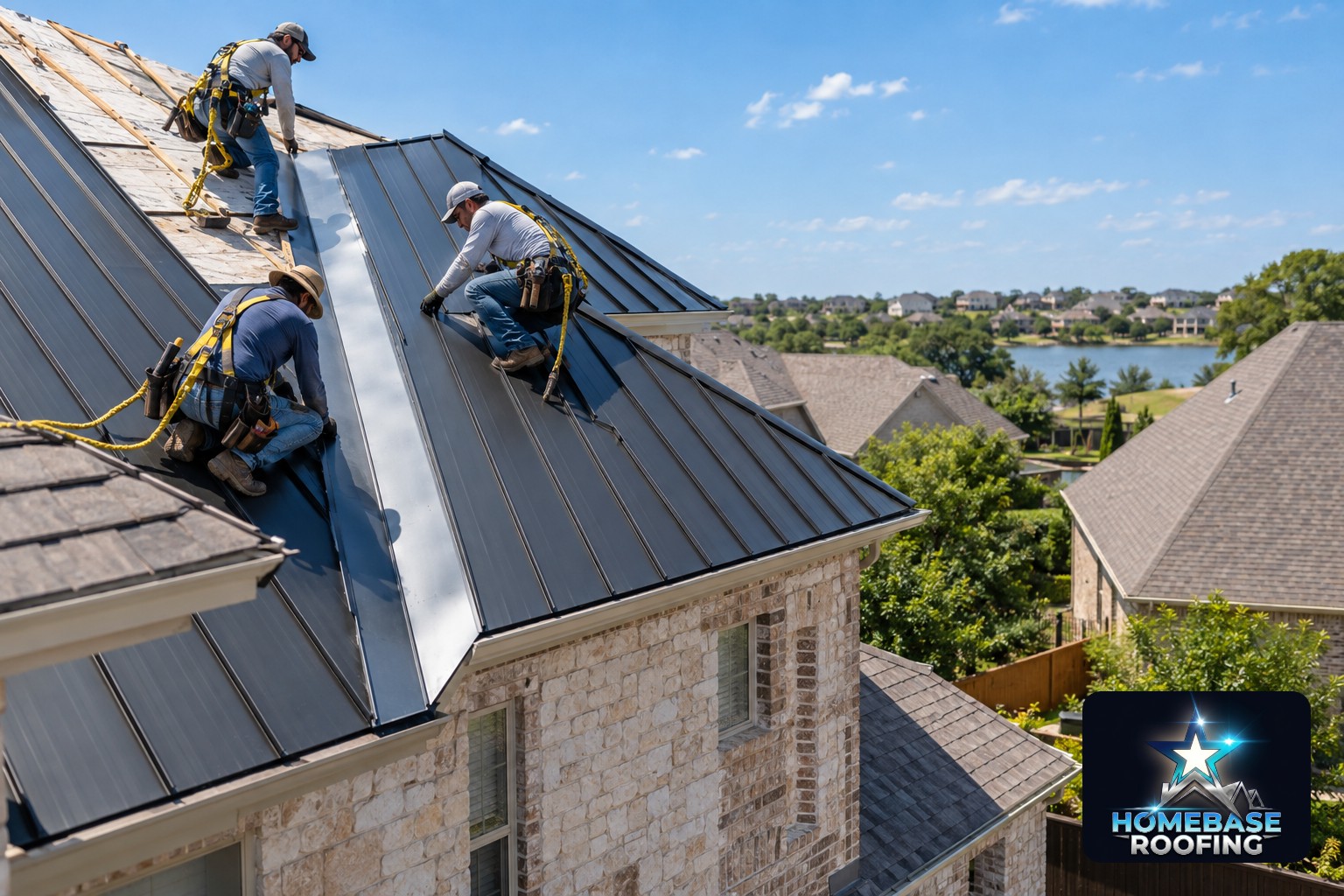
Standing seam panels connect with raised vertical seams. The fasteners are concealed beneath the panels or clips, so screws are not exposed directly to rain and summer heat.
Its main advantages are:
- Clean, finished appearance
- Concealed fastening system
- Better allowance for expansion and contraction
- Fewer exposed points that require routine checking
- Good fit for full-time residences and complex rooflines
Metal moves as temperatures change. That matters in DFW, where a roof can go from a cool spring morning to intense afternoon heat. Standing seam systems use clips or concealed connections that allow controlled movement.
The tradeoff is cost. Panels, trim and installation take more time and skill. Complicated valleys and wall transitions may require pieces fabricated for your roof.
Exposed-fastener metal roofing
Exposed-fastener panels are attached through the face of the metal with screws and sealing washers. You can see the screw lines from the ground.
Its advantages include:
- Lower initial cost than standing seam
- Faster installation on simple roof shapes
- Practical option for barns, workshops, patio covers and some homes
- Individual fasteners can be inspected and replaced
The main concern is maintenance. Heat causes panels to expand and contract, which can loosen fasteners or wear sealing washers over time. Screws installed at the wrong angle or tightened too far can also create leak points.
For a light-commercial building, detached garage or straightforward rural home, exposed fastener may be a reasonable choice. For your primary residence, standing seam usually offers a more refined appearance and fewer exposed penetrations.
Is a metal roof worth the extra cost?
A metal roof can be worth it if you plan to stay in your home, value lower routine maintenance and want a system that often outlasts standard asphalt shingles. It is not automatically the right choice for every home or budget.
Metal may make sense when:
- You expect to own the home for many years
- Your roof has a simple shape that suits long panels
- You want strong resistance to wind uplift
- You prefer a reflective roof surface during North Texas summers
- Your HOA allows the profile and color you want
- You are comfortable paying more upfront for a longer-term system
Metal may be less practical when:
- You expect to move soon
- Your roof has many short sections, valleys or curved details
- Your HOA restricts visible metal roofing
- The higher upfront cost would strain your budget
- A quality architectural shingle system already meets your needs
Hail resistance deserves an honest explanation. Metal does not become damage-proof. Large North Texas hail can dent panels, damage coatings and mark soft metals such as vents and flashing. Some systems carry a Class 4 impact rating, but that rating does not mean the roof cannot sustain cosmetic or functional damage.
How does metal compare with roof replacement cost in Dallas?
If you are comparing roof replacement cost in Dallas or the surrounding suburbs, asphalt shingles usually have the lower upfront price. Metal generally costs more because the material, trim work and installation are different.
The better comparison is not just today's total. Ask what each estimate includes:
- Full tear-off or installation over old roofing
- Decking inspection and replacement terms
- Underlayment type
- Ventilation plan
- Valley and wall flashing details
- Panel gauge and finish
- Workmanship warranty
- Cleanup and magnetic nail collection
Our guide to roof replacement cost in North Texas explains the other factors that affect a complete roofing estimate. If you decide metal is right but want to preserve cash, review available roof financing options before choosing a payment structure.
Storm claims require another careful comparison. A carrier may base its scope on materials comparable to what was already installed. If you choose to upgrade from shingles to metal, you may be responsible for the added cost. We document visible damage, provide photos and measurements, and explain the roofing scope line by line. We do not promise a claim outcome.
Texas insurers generally allow one year from the storm date to file. Check your policy because deadlines and conditions can differ.
What should you do before choosing metal?
Start with the roof you have, not a panel sample in a showroom. A proper inspection should confirm the roof area, pitch, decking condition, ventilation and access around your home.
Then take these steps:
- Check your HOA rules. Some Plano, Allen and Frisco neighborhoods limit metal profiles, reflectivity or colors.
- Compare complete systems. Do not compare one bare panel price with another contractor's full tear-off and flashing package.
- Ask who forms the trim. Valleys, walls, chimneys and penetrations need details made for your roof.
- Discuss hail expectations. Ask about impact ratings, cosmetic exclusions and how the manufacturer treats denting.
- Review both options. A well-installed shingle roof may still be the sensible answer for your home.
You can also see what goes into a complete roof replacement in Plano, including tear-off, decking, underlayment, ventilation and cleanup.
Get a clear price for your roof
Online ranges are useful for planning, but your home deserves a real measurement. Homebase Roofing can inspect the roof, check the attic where accessible and explain whether metal, shingles or a repair makes the most sense.
Get a Free Roof Inspection or call (945) 298-3335 to talk through your options. No pushy sales. If your roof's fine, we'll tell you and leave.
Written by Giovanni Esoto, SEO Specialist & Content Writer. Roofing accuracy reviewed by Curtis Dunn, Owner & Roofing Subject Matter Expert.

Written by
Giovanni EsotoSEO Specialist & Content Writer
Five years of SEO and content experience focused on useful, locally relevant homeowner guidance.
LinkedInReviewed for roofing accuracy by
Curtis DunnOwner & Roofing Subject Matter Expert
Homebase Roofing reviews technical roofing details for accuracy and North Texas relevance. This content is not legal, engineering, or insurance advice.
Storm season doesn't wait. Neither should your roof.
Free inspection, written report, honest verdict. We'll call you within 1 business hour — no obligation, no pressure.
No pushy sales. If your roof's fine, we'll tell you and leave.
- Licensed & insured
- 5.0 on Google
- 1-hour callback