

October 2026
Signs You Need a New Roof in Plano, TX
The warning signs that mean it's time to replace, not repair, your North Texas roof.
How do I know if I need a new roof?
If you found a water stain after last night’s storm, you are probably wondering whether a repair will do or your whole roof is done. That worry is understandable. In Plano and across North Texas, the clearest signs you need a new roof are widespread damage, returning leaks, and areas that can no longer be repaired reliably.
Key takeaways:
- One missing shingle or a small leak does not automatically mean replacement.
- Widespread hail bruising, brittle shingles, and recurring leaks deserve a closer look.
- Repair usually makes sense when damage is limited and the surrounding roof is sound.
- Have your roof inspected at least once a year and after significant hail or wind.
What are the most common signs you need a new roof?
Look for patterns rather than one isolated flaw. A damaged pipe boot may need a simple repair, while problems across several roof slopes may point toward replacement.
Are your shingles cracked, curled, or missing?
A few missing shingles after strong wind can often be replaced. Replacement becomes more likely when shingles are brittle, curled at the edges, cracked across several slopes, or no longer holding their seal.
North Texas summer heat puts shingles through long periods of high surface temperatures. Then spring storms bring sudden temperature changes, hail, and wind uplift. Over time, that combination can weaken the shingle mat and adhesive strips.
Do you see heavy granule loss?
Granules are the rough mineral coating on asphalt shingles. They protect the asphalt from sunlight and weather. You may see loose granules in gutters after a storm, but that alone does not settle the question.
Look for shingles with smooth, dark, or uneven patches. Widespread exposed asphalt is more concerning than a small amount of normal shedding. A roofer should also check whether hail knocked granules loose around circular impact marks.
Does your roof keep leaking in different places?
One leak around a pipe boot, vent, or flashing joint may be repairable. Leaks that return after previous work—or appear in several rooms—can mean the roof system is failing in more than one area.
The stain on your ceiling may not sit directly under the entry point. Water can travel along decking, rafters, or insulation before it becomes visible. That is why an attic inspection matters.

Is the decking soft or sagging?
Decking is the wood layer beneath your shingles. Soft spots, visible sagging, or crumbling wood may indicate that moisture has been getting through for some time.
Some Plano homes have radiant barrier decking, which has a reflective foil surface facing the attic. That foil can make staining harder to read from below, so the inspector may need to check moisture levels and inspect the roof surface carefully.
Sagging should be evaluated promptly. It can involve decking, framing, or ventilation issues rather than shingles alone.
Did hail damage several roof slopes?
North Texas hail does not always leave obvious holes. It can bruise the shingle mat beneath the surface, loosen granules, dent vents, and mark gutters or other soft metals.
The NOAA Storm Events Database can help confirm that a reported storm occurred in Collin County, but it cannot tell you whether your particular roof was damaged. Hail size, wind direction, tree cover, roof pitch, and shingle condition all affect the result.
Should I repair or replace my roof?
Repair when the problem is limited and the rest of the roof remains serviceable. Consider replacement when damage is widespread, repairs keep failing, or matching and sealing the existing shingles is no longer dependable.
| What you find | Repair may make sense | Replacement may make sense | |---|---|---| | Missing shingles | A small section is affected | Several slopes have wind damage or brittle shingles | | Roof leak | The source is one pipe boot or flashing joint | Leaks recur or appear in multiple areas | | Hail marks | Damage is cosmetic or limited to one component | Functional damage is spread across the roof | | Granule loss | Wear is isolated | Large areas show exposed asphalt or hail bruising | | Decking damage | One small section can be replaced | Moisture damage extends across multiple sections | | Roof age | The roof is still sealing and repairable | Age is combined with widespread wear or repeated problems |
A good inspection should give you both options when both are reasonable. If a focused roof repair in Plano can safely extend the roof’s service life, you should hear that. If replacement is the sounder choice, the roofer should show you why with photos and measurements.
What does a proper roof inspection include?
A useful inspection covers the exterior, attic, drainage, and visible interior signs. It should leave you with evidence you can understand, not just a quick opinion from the driveway.
- Start with your concern. Show the inspector the ceiling stain, loose shingle, gutter debris, or area where you heard dripping.
- Check every accessible slope. The inspector should look for hail bruising, wind uplift, cracked shingles, exposed fasteners, and uneven wear.
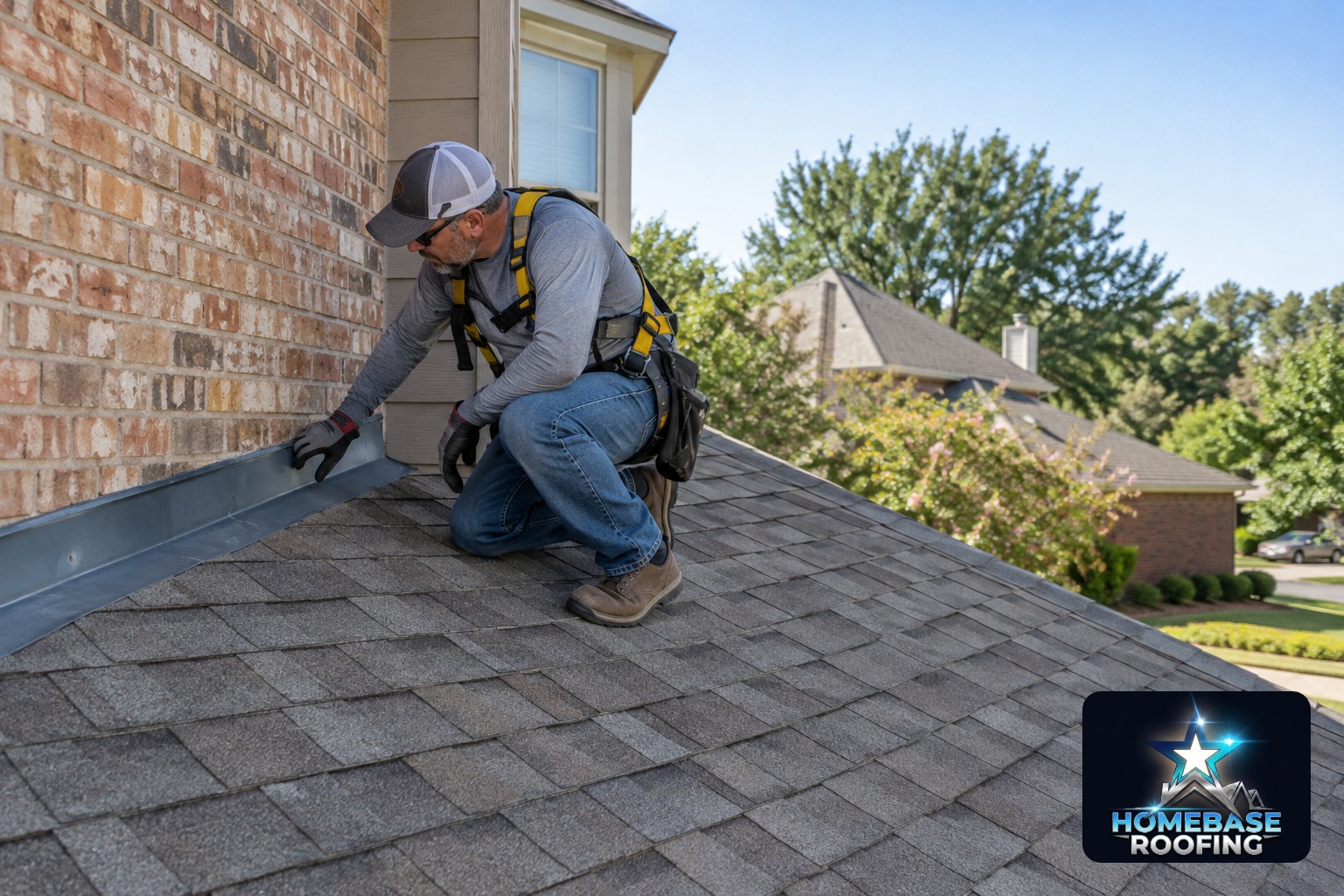
- Examine roof openings and transitions. Pipe boots, vents, valleys, walls, chimneys, and flashing are common leak points.
- Look at gutters and soft metals. Dents and impact marks can help establish storm direction, though they do not prove shingle damage by themselves.
- Inspect the attic when accessible. This may reveal wet decking, staining, poor ventilation, or daylight around penetrations.
- Document the findings. Photos and plain explanations help you decide between monitoring, repair, and roof replacement in Plano.
Many Plano neighborhoods built from the 1970s through the 1990s have additions, intersecting rooflines, mature trees, and alley-access garages. Those details create valleys and transitions that deserve careful attention.
How often should a roof be inspected?
Have your roof professionally inspected at least once a year and after a significant hailstorm, windstorm, or suspected leak. You should also schedule an inspection before buying or selling a home and after major work involving solar panels, gutters, vents, or nearby trees.
Annual inspections are especially useful in Plano, Allen, Frisco, McKinney, Murphy, Parker, Wylie, and Richardson because storm damage is not always visible from the ground. Spring hail may loosen granules or bruise shingles without causing an immediate leak. Summer heat can then make an already weakened area more brittle.
Between inspections, walk around your home after major weather. Stay on the ground. Look for shingles in the yard, bent gutter sections, displaced flashing, and new stains indoors. Do not climb onto a wet, steep, or storm-damaged roof.
Can North Texas soil and heat affect your roof?
They can contribute to changes you notice, but they do not automatically mean the roof needs replacement. Expansive clay soil can move as moisture conditions change, while intense summer heat affects shingles, sealants, and attic temperatures.
Movement in the home may show up around wall flashing, roof-to-wall connections, or additions. It can also create interior cracks that are unrelated to a roof leak. An inspection should separate roofing problems from foundation, plumbing, or condensation issues rather than making assumptions.
Ventilation matters too. A balanced system allows air to enter low at the eaves and exit near the ridge. Blocked soffit vents, disconnected bathroom exhaust ducts, or inadequate ridge ventilation can trap heat and moisture in the attic.
What should I do after a hailstorm?
Start safely, document what you can see, and arrange an inspection before deciding on repair or replacement. You do not need to make a major decision while the storm is still fresh.
- Check inside for active dripping or new ceiling stains.
- Photograph visible damage from the ground, including fallen branches and dented gutters.
- Move belongings away from an active leak and use a container to catch water.
- Schedule an inspection so the roof, attic, and exterior components can be documented.
- Review your insurance policy and contact your carrier if you decide to report damage.
Texas policies often include deadlines and notice requirements. Many storm claims have a one-year filing window, but your own policy controls. The Texas Department of Insurance provides consumer guidance, and your carrier can explain the deadline that applies to your coverage.
Frequently asked questions
Does one roof leak mean I need a new roof?
No. A single leak may come from a damaged pipe boot, flashing joint, vent, or small shingle area. Replacement becomes more likely when leaks recur or damage extends across several parts of the roof.
Can I tell if my roof has hail damage from the ground?
You may notice dented gutters, displaced shingles, or storm debris, but shingle bruising often requires a close inspection. Avoid climbing onto the roof yourself, especially after rain or hail.
How often should a roof be inspected in Plano?
Schedule a professional inspection at least once a year and after significant hail, wind, or a suspected leak. An additional inspection is sensible before a home sale or after work involving roof penetrations.
Is roof age enough reason to replace it?
Not by itself. Age matters, but the decision should also consider shingle condition, leak history, decking, ventilation, repairability, and the manufacturer’s installation requirements.
Should I repair my roof before the next storm?
Active leaks, loose materials, and open roof areas should be addressed promptly. If conditions are safe, temporary protection may reduce further water entry until permanent repairs can be completed.
Get a clear answer about your roof
You should not have to guess from a ceiling stain or a handful of granules. Homebase Roofing will inspect the roof, show you what we find, and explain whether repair, replacement, or simple monitoring makes sense for your home.
Get a Free Roof Inspection, or call Homebase Roofing at (945) 298-3335. No pushy sales. If your roof’s fine, we’ll tell you and leave.

Written by
Giovanni EsotoSEO Specialist & Content Writer
Five years of SEO and content experience focused on useful, locally relevant homeowner guidance.
LinkedInReviewed for roofing accuracy by
Curtis DunnOwner & Roofing Subject Matter Expert
Homebase Roofing reviews technical roofing details for accuracy and North Texas relevance. This content is not legal, engineering, or insurance advice.
Storm season doesn't wait. Neither should your roof.
Free inspection, written report, honest verdict. We'll call you within 1 business hour — no obligation, no pressure.
No pushy sales. If your roof's fine, we'll tell you and leave.
- Licensed & insured
- 5.0 on Google
- 1-hour callback