
October 2026
Wind Damage on a Roof: What It Looks Like After a North Texas Storm
How to spot creased, lifted, and missing shingles after high winds, and what to document for insurance.
Do You Have Wind Damage on Your Roof?
You noticed a water stain after last night’s storm, or you found a shingle in the yard and now you are wondering what else happened up there. That concern is reasonable, especially when your roof looks mostly normal from the driveway.
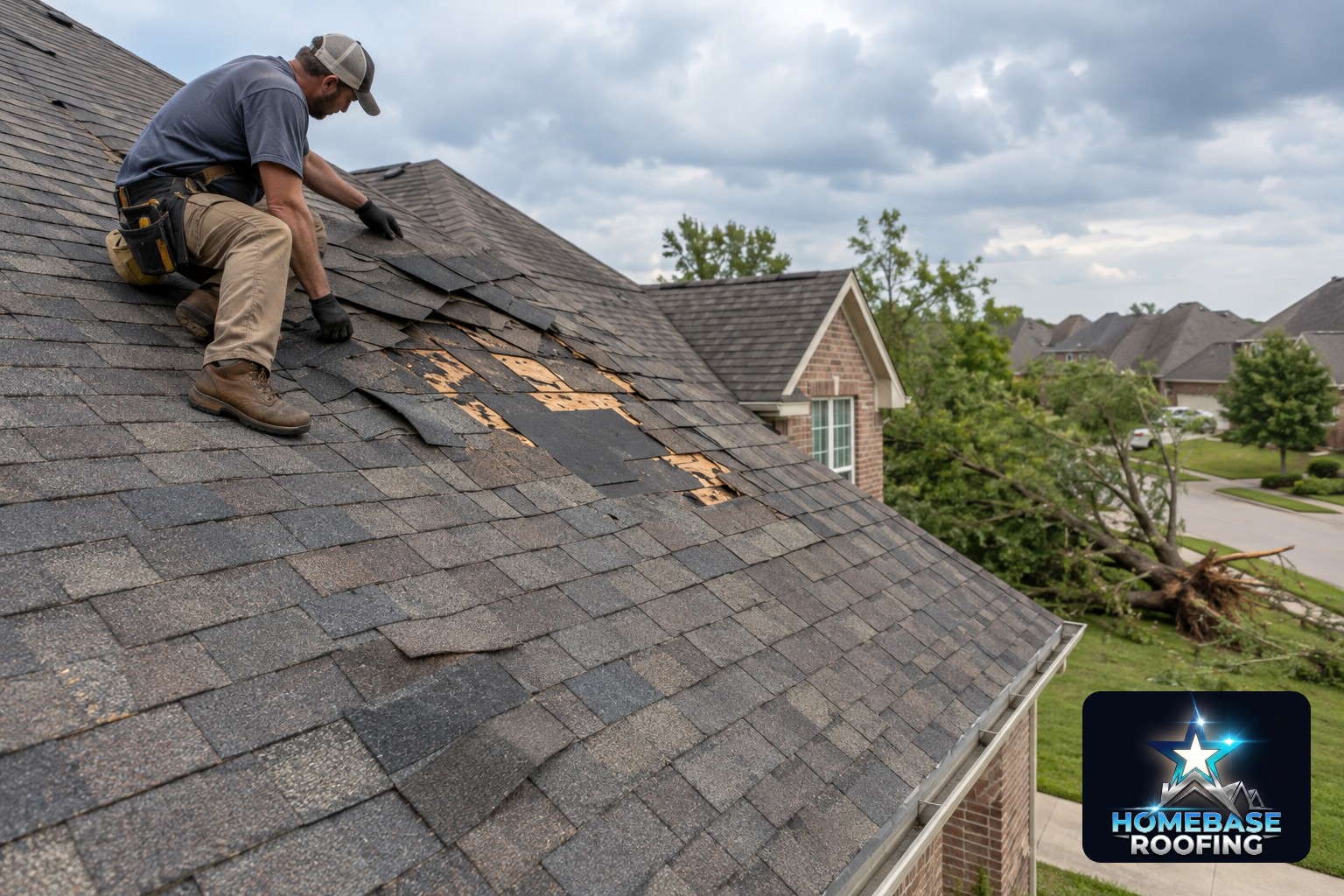
Wind damage on a roof often looks like lifted, creased, loose, or missing shingles. It can happen in seconds during a strong gust. Most homeowners policies may cover sudden wind damage, but coverage depends on your policy, deductible, roof condition, and the cause documented during the inspection.
The safest next step is to check your home from the ground, protect any active leak, and arrange a professional inspection.
What Does Wind Damage Look Like?
Wind does not always remove a whole section of shingles. It often starts at an exposed edge, ridge, corner, or roof slope facing the strongest gusts. Air gets beneath a shingle and pulls against the seal strip that holds it down.
From the ground, you may notice:
- Missing shingles or tabs
- Shingles sitting at an odd angle
- A raised or uneven line across a roof slope
- Pieces of shingles in the yard or alley
- Bent ridge-cap shingles along the peak
- Loose metal flashing near a chimney or wall
- A shifted vent, pipe boot, or gutter
- Water stains on a ceiling or exterior wall
- Granules collecting near downspout exits
A shingle can also lift and settle back into place. That makes the damage difficult to see without getting close. The shingle may have a crease through it, broken adhesive, or exposed fasteners even though it looks flat from below.
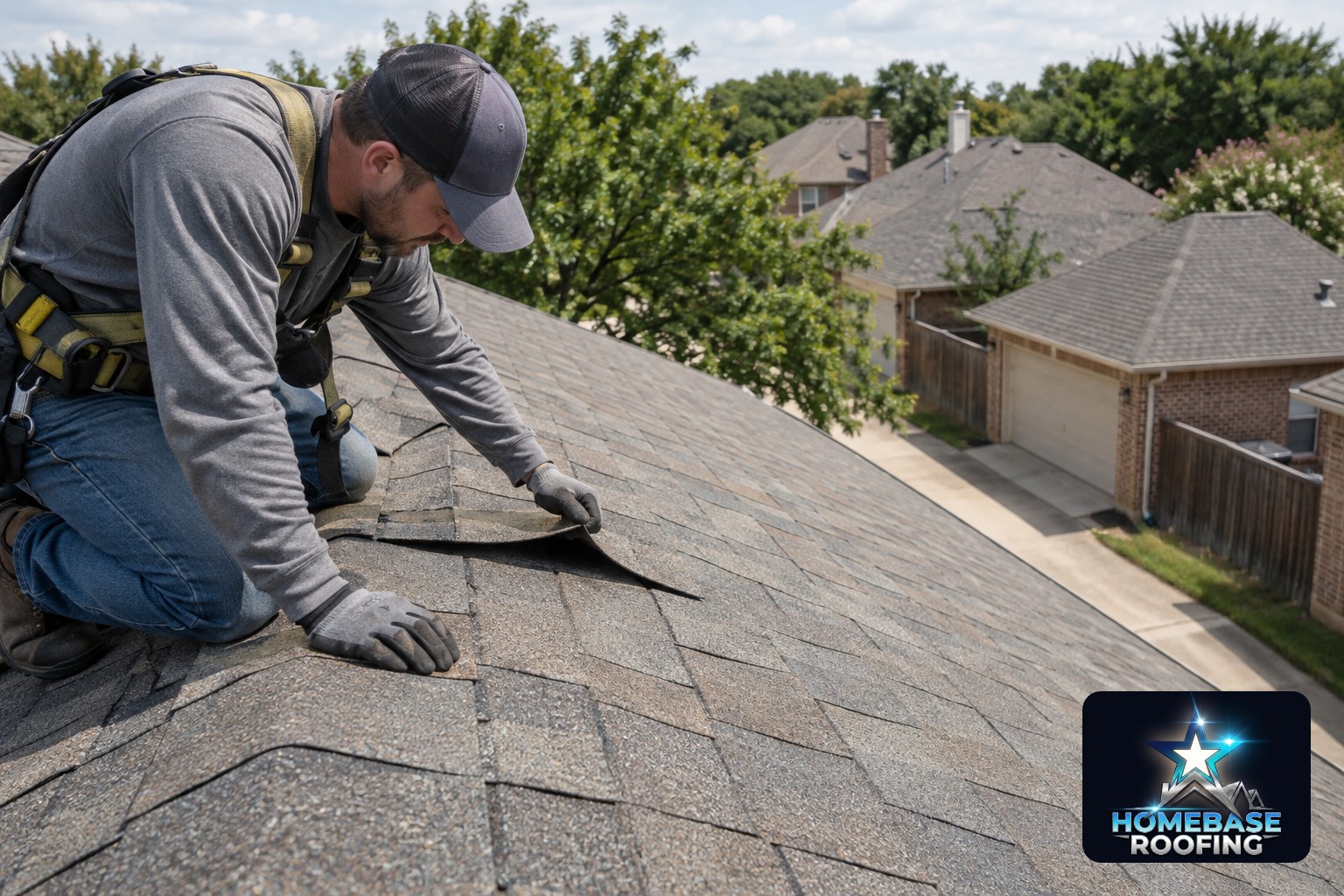
Plano homes built from the 1970s through the 1990s can have complicated rooflines, rear alley access, several valleys, and older flashing details. Those areas deserve a close look after strong wind. Radiant barrier decking in the attic can also make it harder to trace a small leak from inside because water may travel before it reaches the ceiling.
A ceiling crack alone does not prove that the roof is damaged. North Texas clay soil can contribute to seasonal movement in a home. A fresh brown stain, damp insulation, or water that appears after a storm is different and should be checked promptly.
How Fast Does Wind Damage Happen?
Wind damage can happen during one gust. It does not take hours of steady wind.
There is no single wind speed that guarantees roof damage. The result depends on the roof’s age, shingle condition, installation, pitch, exposure, and whether the seal strips are still holding. Summer heat can age roofing materials, while repeated spring storms can loosen vulnerable areas over time.
The leak may begin just as quickly. Once wind lifts a shingle or pulls flashing loose, wind-driven rain can move beneath the roofing system. Water may reach the attic during the same storm, or it may remain hidden until the next heavy rain.
If water is actively entering your home, move belongings away from the area and place a container beneath the drip. Do not climb onto a wet roof or try to secure a tarp during high wind. Visit our emergency roof repair and tarping page for the appropriate next steps.
Does Insurance Cover Wind Damage?
A homeowners policy may cover sudden, accidental wind damage. That can include missing shingles, damaged flashing, or interior water damage caused by a covered storm. Your deductible and the terms of your policy still apply.
Insurance generally does not cover normal wear, neglected maintenance, or materials that failed only because of age. That is why the inspection matters. The goal is to separate storm damage from ordinary aging and document what is actually present.
A clear inspection record may include:
- Photos of every affected roof slope
- Close views of lifted, creased, or missing shingles
- Notes about damaged vents, flashing, gutters, and soft metals
- Measurements of the damaged areas
- Photos of attic moisture or interior staining
- The approximate date of the storm
Homebase Roofing documents damage, provides photo evidence and measurements, and can meet your adjuster at the property. We can also explain the roofing scope line by line. The carrier makes the coverage decision based on your policy and its inspection.
Texas insurers generally allow one year from the storm date to file a claim, though your specific policy can set important terms and deadlines. Review your policy or contact your carrier if you are uncertain. Our guide to roof insurance claims explains what documentation is useful and what to expect during the process.
Do You Need a Roof Inspection After Hail Too?
Yes. Wind and hail often arrive in the same North Texas storm, but they leave different signs.
Wind tends to lift, crease, or remove materials. Hail can knock protective granules from shingles and leave bruising in the asphalt beneath the surface. It may also dent gutters, roof vents, flashing, or other soft metal components.
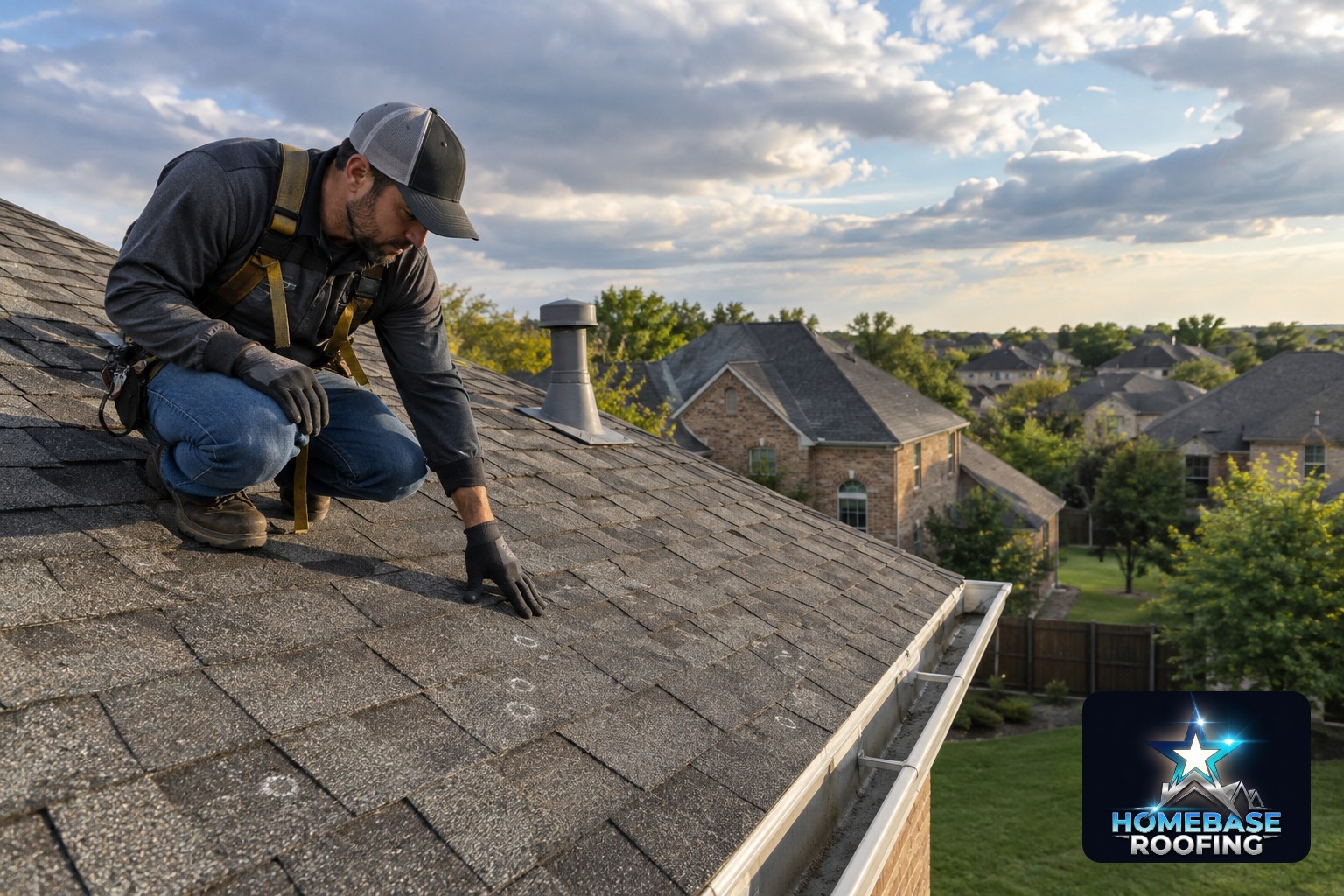
A roof inspection after hail should cover the full roofing system, not just one test area. The inspector should check each slope, ridge caps, valleys, vents, pipe boots, flashing, gutters, and accessible attic areas. Hail damage is not always visible from the driveway, and random granule loss does not automatically mean the roof needs replacement.
If both wind and hail are present, the inspection should document them separately. That gives you a more accurate picture of whether you need a small repair, broader storm damage roof repair, or no work at all.
What Should You Do After a Plano Windstorm?
Start with a calm walk around your property once conditions are safe.
- Look for shingles, metal pieces, or tree limbs in the yard.
- Check ceilings, exterior walls, and attic areas for moisture.
- Photograph visible damage without climbing onto the roof.
- Note the storm date and when you first saw the problem.
- Arrange an inspection before another round of rain arrives.
Do not assume that every stain means you need a new roof. A loose pipe boot, exposed nail, or small flashing failure may only require a focused repair. On the other hand, replacing one visible shingle without checking the surrounding slope can leave concealed wind damage in place.
A proper inspection should give you a plain answer: what happened, where the damage is, and what repair makes sense for your home.
Get a Free Roof Inspection
If you found a shingle in the yard, noticed a ceiling stain, or simply want your roof checked after a Plano storm, get a free roof inspection from Homebase Roofing.
We will show you what we find and explain your options in clear terms. No pushy sales. If your roof’s fine, we’ll tell you and leave.

Written by
Giovanni EsotoSEO Specialist & Content Writer
Five years of SEO and content experience focused on useful, locally relevant homeowner guidance.
LinkedInReviewed for roofing accuracy by
Curtis DunnOwner & Roofing Subject Matter Expert
Homebase Roofing reviews technical roofing details for accuracy and North Texas relevance. This content is not legal, engineering, or insurance advice.
Storm season doesn't wait. Neither should your roof.
Free inspection, written report, honest verdict. We'll call you within 1 business hour — no obligation, no pressure.
No pushy sales. If your roof's fine, we'll tell you and leave.
- Licensed & insured
- 5.0 on Google
- 1-hour callback