
October 2026
ACV vs. RCV Roof Coverage: What Texas Homeowners Should Know
A plain explanation of ACV and RCV roof coverage and what each means for your out-of-pocket cost.
What does ACV vs. RCV mean for your roof claim?
You have a water stain after last night’s Plano storm, and the adjuster is coming Friday. Now your estimate says ACV, RCV, and depreciation, and you are worried the first check will not cover the roof. ACV subtracts age and wear; RCV can include that withheld amount after completed, documented work, subject to your policy.
Key takeaways:
- ACV means the roof’s value after depreciation.
- RCV means the covered cost to replace damaged materials with comparable materials.
- Recoverable depreciation is usually released after the work is completed and documented.
- Your Texas roof deductible is the part of a covered claim you are responsible for paying.
Written by: Giovanni Esoto, SEO Specialist & Content Writer
Roofing accuracy reviewed by: Curtis Dunn, Owner & Roofing Subject Matter Expert
What is ACV on a roof insurance claim?
Actual cash value, or ACV, is the estimated replacement cost minus depreciation. Depreciation accounts for the roof’s age, condition, expected service life, and normal wear before the storm.
North Texas roofs work hard. Spring hail, summer heat, wind, and rapid temperature changes can all affect shingles over time. If your roof was already well into its service life, the ACV amount may be noticeably lower than the full estimated replacement cost.
An ACV-only policy generally pays the depreciated value of covered damage, minus your deductible. It does not usually provide a later payment for recoverable depreciation.
What is RCV on a roof insurance claim?
Replacement cost value, or RCV, is the covered cost to repair or replace damaged roofing with materials of similar kind and quality, without subtracting depreciation from the final covered amount. Your deductible and policy limits still apply.
Many RCV claims are paid in stages. The carrier may issue an initial ACV payment, then release eligible depreciation after the roof work is completed and the required documents are submitted.
RCV does not mean every item on a contractor’s proposal is covered. Your policy, carrier estimate, exclusions, code provisions, and final scope determine what is included.
| Term | What it means | When money is generally paid | |---|---|---| | ACV | Replacement cost minus depreciation | After the carrier evaluates the covered damage | | RCV | Covered replacement cost before depreciation | Often through an ACV payment followed by eligible depreciation | | Deductible | Your share of the covered loss | Paid by you as part of the project | | Recoverable depreciation | Eligible depreciation held back from the first payment | After completed work and required documentation |
For a broader look at inspections, estimates, and carrier communication, read our Texas roof insurance claim guide.
What is recoverable depreciation?
Recoverable depreciation is the portion of an RCV claim that the carrier temporarily holds back because of the roof’s age and wear. You may recover it after completing the covered work and sending the carrier the documents required by your policy.
The usual process looks like this:
- The carrier prepares an estimate showing replacement cost, depreciation, deductible, and an initial payment.
- You choose a roofing contractor and complete the covered work.
- The contractor provides a final invoice, completion details, and supporting photos.
- You or your authorized representative submits the required documents to the carrier.
- The carrier reviews the file and releases eligible depreciation according to the policy.
Some depreciation may be listed as nonrecoverable. That can happen with an ACV policy or with specific items and endorsements. Check the estimate carefully rather than assuming every withheld dollar will be released.
Our roof insurance claims service focuses on the construction side. We document damage, provide measurements and photos, explain the roofing scope line by line, and meet your adjuster at the property when scheduled.
How does a roof deductible work in Texas?
Your deductible is the amount you pay toward a covered roof claim. It is shown on your policy declarations page and may be a fixed dollar amount or a percentage of your dwelling coverage.
A percentage deductible is based on the insured value stated in the policy, not simply the contractor’s roof price. That detail can surprise homeowners, so confirm the actual dollar amount with your carrier before signing a roofing agreement.
Texas law requires property owners to pay their deductible. The Texas Department of Insurance explains property deductibles and why your payment should be clearly shown in the project records.
Your deductible is your share of covered work. You could also be responsible for upgrades you request, excluded damage, rotten decking not covered by the policy, or differences between the carrier’s scope and the work your home needs. Those items should be explained before construction begins.

What should you check on the insurance estimate?
Start with the summary page, then compare the estimate with what is physically on your roof. Small scope details can affect whether the planned work is complete.
Look for:
- The stated replacement cost value and actual cash value
- Recoverable and nonrecoverable depreciation
- Your deductible amount
- Shingle removal and replacement quantities
- Underlayment, drip edge, valley flashing, ridge vent, and pipe boots
- Decking allowances and any radiant barrier decking notes
- Gutters, vents, flashing, and other storm-damaged components
- Deadlines for repairs and depreciation requests
Plano homes built from the 1970s through the 1990s may have multiple roof layers, older ventilation layouts, radiant barrier decking, or alley-access rooflines that affect the construction plan. Clay soil movement can also cause interior cracks that are unrelated to hail, so the inspection should separate storm damage from normal home movement.
The Texas Department of Insurance claim tips recommend documenting damage and keeping records. You can also check the NOAA Storm Events Database for reported storms, though a nearby report does not prove that your specific roof was damaged.
What should you do after a North Texas storm?
Protect the home first, document what happened, and verify your policy deadlines before making permanent repairs. Many Texas wind and hail policies require notice within one year of the storm date, but your specific policy controls.
- Photograph visible signs. Capture ceiling stains, displaced shingles, damaged gutters, and fallen branches without climbing onto the roof.
- Stop active water entry. If water is coming in, arrange safe emergency tarping and keep receipts.
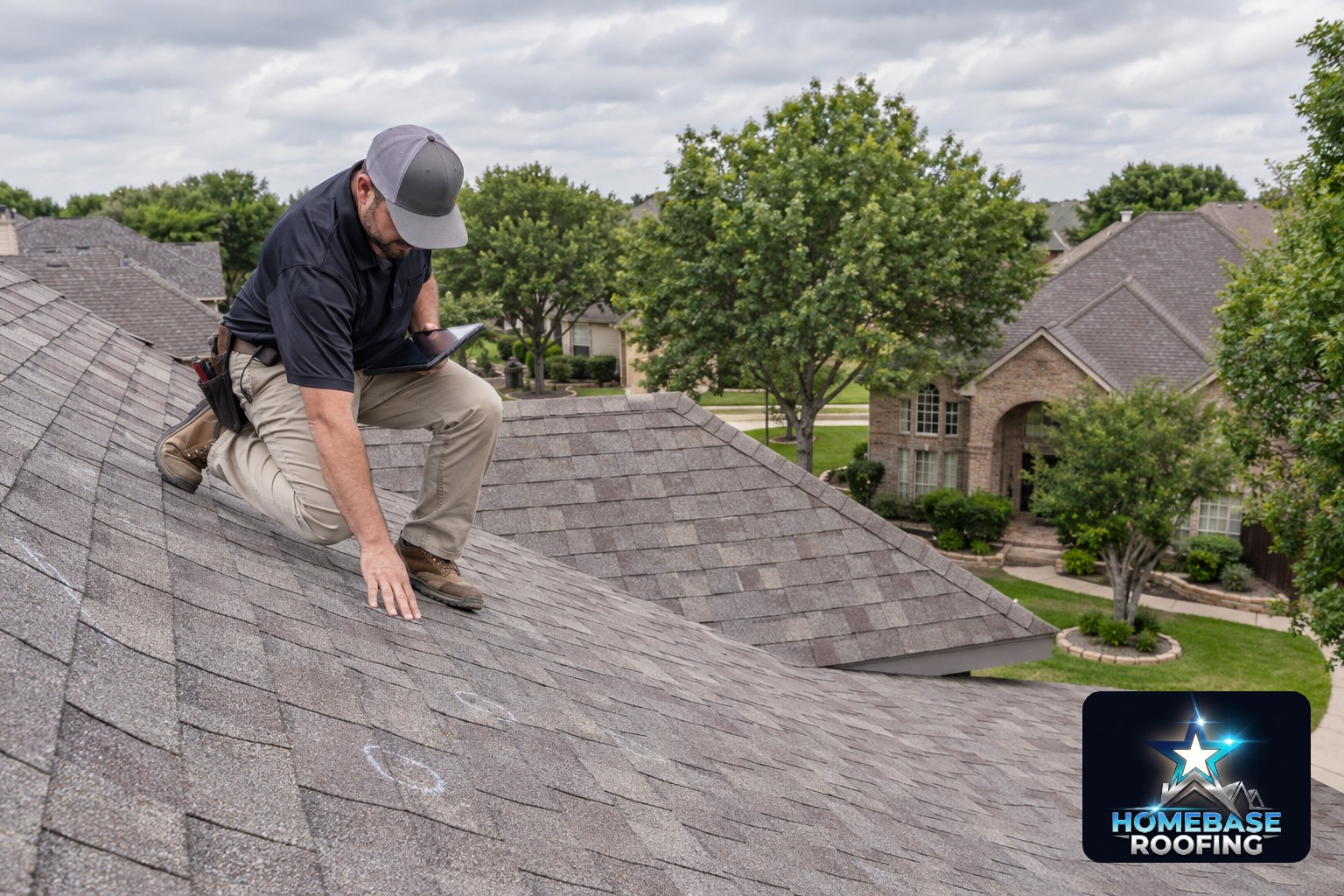
- Request a roof inspection. A roofer can identify hail bruising, granule loss, wind uplift, flashing damage, and soft-metal impacts.
- Review your policy. Confirm whether coverage is ACV or RCV, your deductible, and all reporting deadlines.
- Compare the scopes. Match the carrier estimate with the roof’s actual materials and required installation details.
- Keep every document. Save photos, estimates, invoices, emails, and proof of payment.
If replacement is needed, our guide to roof replacement in Plano explains tear-off, decking review, underlayment, ventilation, and final cleanup.
Frequently asked questions
Does the insurance carrier always pay ACV first?
Many RCV claims begin with an ACV payment, but payment procedures vary by carrier and policy. Read the estimate and ask the carrier to explain each payment line.
Do I receive recoverable depreciation if I do not replace the roof?
Usually not. Recoverable depreciation is generally tied to completing the covered repairs and submitting documentation within the policy deadline.
Is a roof deductible charged per contractor or per claim?
The deductible applies according to the covered claim and policy, not according to how many contractors provide estimates. Ask your carrier how the deductible applies if more than one part of your property was damaged.
Does an older roof automatically mean I have ACV coverage?
No. Roof age may affect depreciation, but your declarations page and endorsements determine whether the roof is covered at ACV or RCV.
How long do I have to report hail damage in Texas?
Many Texas policies set a one-year notice period for wind or hail damage, sometimes with limited extensions. Check your policy and contact your carrier promptly because deadlines vary.
What is the next step if the numbers still do not make sense?
You do not need to sort through the roof damage alone. Homebase Roofing can inspect your roof, photograph what we find, and explain the construction scope in plain language.
Get a Free Roof Inspection or call (945) 298-3335 to talk with Homebase Roofing. No pushy sales. If your roof’s fine, we’ll tell you and leave.

Written by
Giovanni EsotoSEO Specialist & Content Writer
Five years of SEO and content experience focused on useful, locally relevant homeowner guidance.
LinkedInReviewed for roofing accuracy by
Curtis DunnOwner & Roofing Subject Matter Expert
Homebase Roofing reviews technical roofing details for accuracy and North Texas relevance. This content is not legal, engineering, or insurance advice.
Storm season doesn't wait. Neither should your roof.
Free inspection, written report, honest verdict. We'll call you within 1 business hour — no obligation, no pressure.
No pushy sales. If your roof's fine, we'll tell you and leave.
- Licensed & insured
- 5.0 on Google
- 1-hour callback