
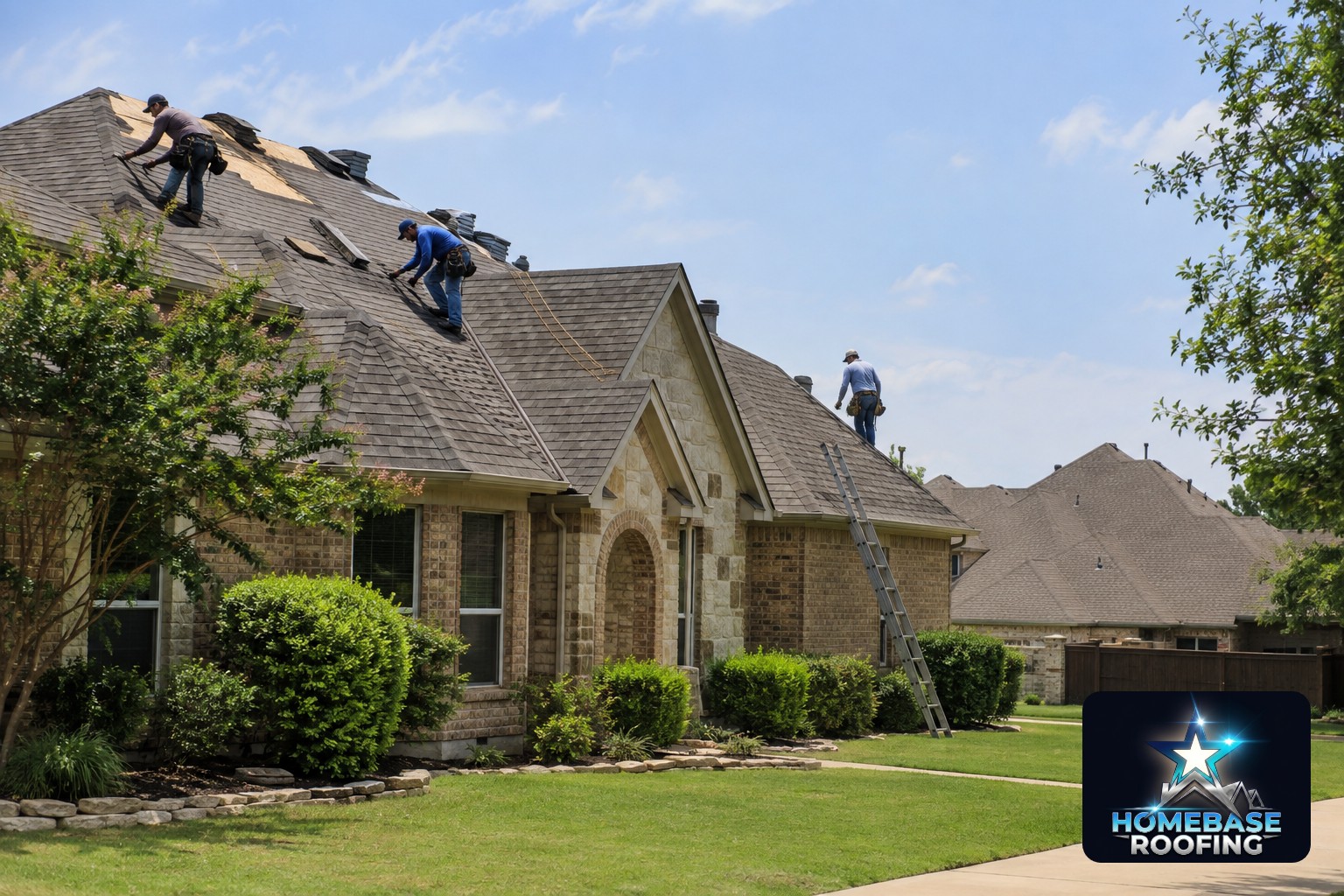
October 2026
Does Homeowners Insurance Cover Roof Replacement in Texas?
What Texas policies usually cover, what they exclude, and how ACV and RCV change what you're paid.
Does homeowners insurance cover roof replacement?
You found a water stain after last night’s storm, and an adjuster is coming Friday. You want to know whether your Texas homeowners policy will pay for a new roof. It may, if a covered event such as hail or wind caused the damage; age, wear, heat, and poor maintenance usually are not covered.
Key takeaways:
- Coverage depends on what damaged the roof, not just how old it is.
- ACV pays the roof’s depreciated value. RCV may cover replacement cost after policy requirements are met.
- Hail bruising, wind uplift, missing shingles, and storm-created openings may qualify as storm damage.
- Your policy, deductible, exclusions, and claim deadline control what the carrier pays.
It is normal to feel unsure here. Roof damage is hard to see from the ground, and insurance paperwork rarely uses everyday language. The first step is separating storm damage from ordinary aging.
Will insurance replace an old roof?
Insurance may replace an old roof when a covered storm caused enough direct damage to require replacement. It generally will not replace a roof simply because the shingles are worn out, brittle, leaking from age, or near the end of their useful life.
Age still matters. A carrier may inspect the roof’s condition, review earlier repairs, and determine whether the reported damage came from one storm or from long-term wear. Your policy may also change how the loss is valued once the roof reaches a certain age.
In Plano neighborhoods built from the 1970s through the 1990s, we often see roofs with several layers of history. There may be older decking, repaired pipe boots, radiant barrier decking, or previous patches around valleys and chimneys. None of those details automatically disqualifies a claim. They do affect what must be documented.
A fair inspection should answer two different questions:
- What damage did the recent storm cause?
- What conditions were already present before the storm?
That distinction matters. Blistering from North Texas summer heat is not the same as a hail bruise. A slow leak around an aged pipe boot is different from a storm-created opening. Movement related to expansive clay soil may affect framing or drainage, but it is not automatically roof storm damage.
What is ACV vs RCV on a roof claim?
ACV means actual cash value, which accounts for depreciation based on age and condition. RCV means replacement cost value, which may pay the covered cost of replacing the damaged roof without subtracting permanent depreciation, subject to your policy terms, deductible, and required documentation.
| Policy feature | ACV coverage | RCV coverage | |---|---|---| | How the roof is valued | Current depreciated value | Covered replacement cost under the policy | | Effect of roof age | Depreciation usually lowers payment | Age may affect the first payment, but some depreciation may be recoverable | | Typical payment process | One covered payment minus deductible and exclusions | Often an initial ACV payment, followed by eligible recoverable depreciation after work is completed | | Final homeowner responsibility | Deductible plus costs beyond coverage | Deductible plus exclusions, upgrades, or costs beyond coverage | | What to verify | Depreciation method and roof schedule | Deadlines, invoices, completion requirements, and recoverable depreciation |
With an RCV policy, the first check may still look smaller than the roof replacement estimate. That is often because the carrier initially holds back recoverable depreciation. After the covered work is completed and the required documents are submitted, the carrier reviews whether that amount can be released.
An ACV policy works differently. Depreciation is normally not recoverable, so an older roof may receive a smaller payment even when the storm damage is covered.
Read the roof section of your declarations and endorsements. Some Texas policies use a separate wind and hail deductible or a roof payment schedule. The Texas Department of Insurance provides consumer information, but your own policy language controls your claim.
What counts as storm damage to a roof?
Storm damage is direct physical damage caused by a covered event such as hail or wind. Common examples include hail bruising, fractured shingle mats, wind-lifted shingles, missing shingles, damaged flashing, punctures, and storm-created openings that allow water inside.
A roofing inspection may look for:
- Hail bruises that have fractured the shingle beneath the surface
- Circular impact marks with displaced or loosened granules
- Creased shingles caused by wind uplift
- Broken seals along shingle edges
- Missing shingles or exposed underlayment
- Dents on vents, gutters, flashing, and other soft metals
- Impact marks on ridge caps and roof accessories
- Water entry connected to a recent storm-created opening
Granule loss alone does not always prove hail damage. Asphalt shingles naturally lose some granules as they age, especially through years of North Texas heat. The inspector should consider the pattern, direction, shingle condition, and damage to nearby roof components.
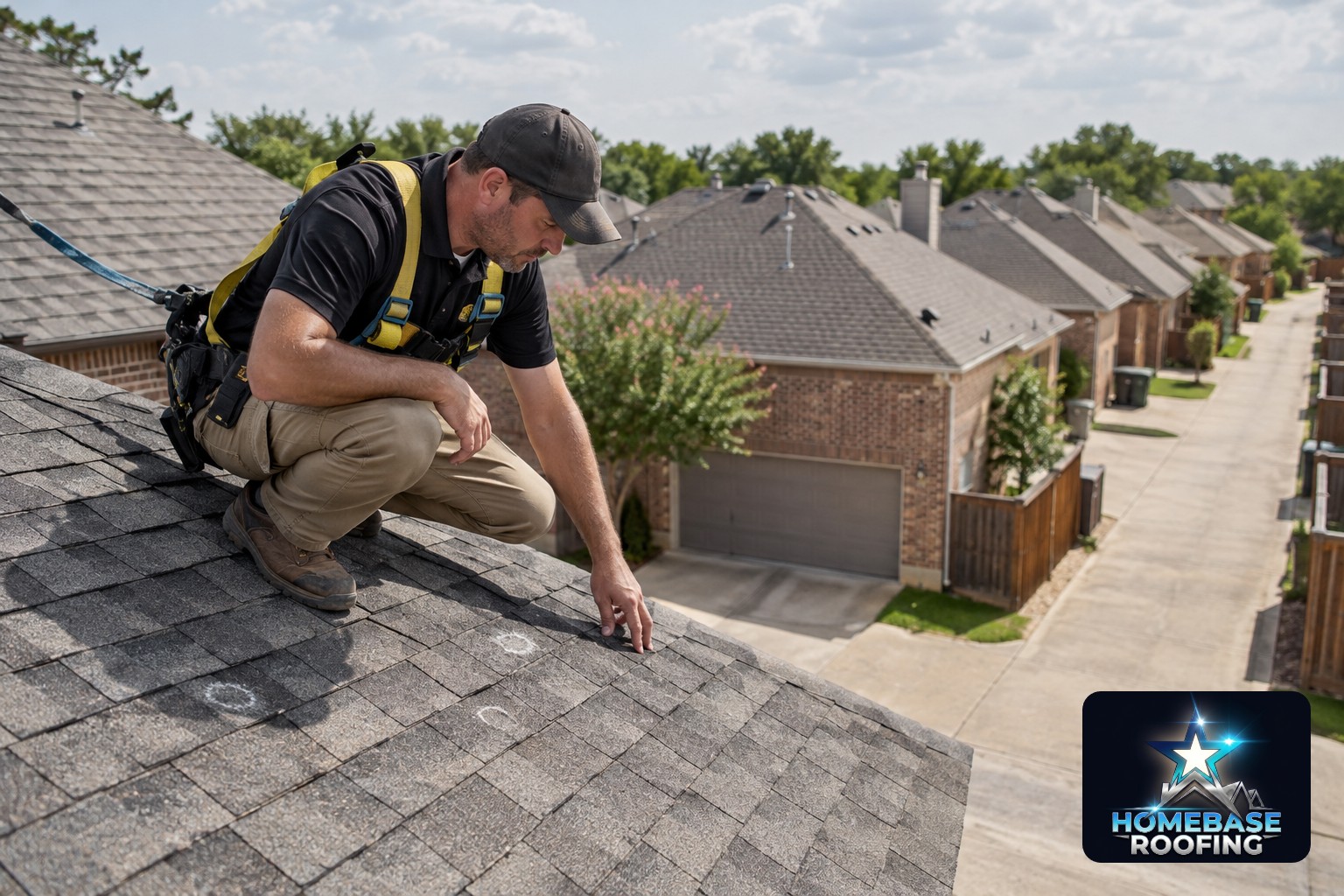
Storm reports can help confirm that hail or strong wind occurred near your home, but they do not prove that your individual roof was damaged. The NOAA Storm Events Database is useful for checking reported events. Your roof still needs an on-site inspection.
You can also review our explanation of storm damage and common roof warning signs.
How should you handle a roof insurance claim in Texas?
Start by documenting the condition of your home and reviewing your policy before repairs begin. You do not need to diagnose the roof yourself, and you should not climb onto wet, steep, or storm-damaged shingles.
Here is a practical process:
- Protect the inside of your home. Move belongings away from active water and place a container beneath the leak. Emergency tarping may be appropriate if it can be done safely.
- Record what you can see. Photograph ceiling stains, wet insulation, fallen shingles, gutter dents, and debris. Note when you first noticed the problem.
- Schedule a roof inspection. Ask for photos and a written explanation separating storm damage from age-related wear.
- Review your policy. Check the deductible, ACV or RCV terms, exclusions, roof schedules, and notice deadlines.
- Report the loss to your carrier if the findings support it. Give accurate information about when the damage occurred and what you observed.
- Keep appointments and documents together. Save the inspection photos, carrier estimate, repair proposals, invoices, and correspondence.
- Compare the carrier scope with the documented damage. A roofer can explain roofing measurements and construction items and meet your adjuster on the roof. Coverage decisions remain with the carrier.
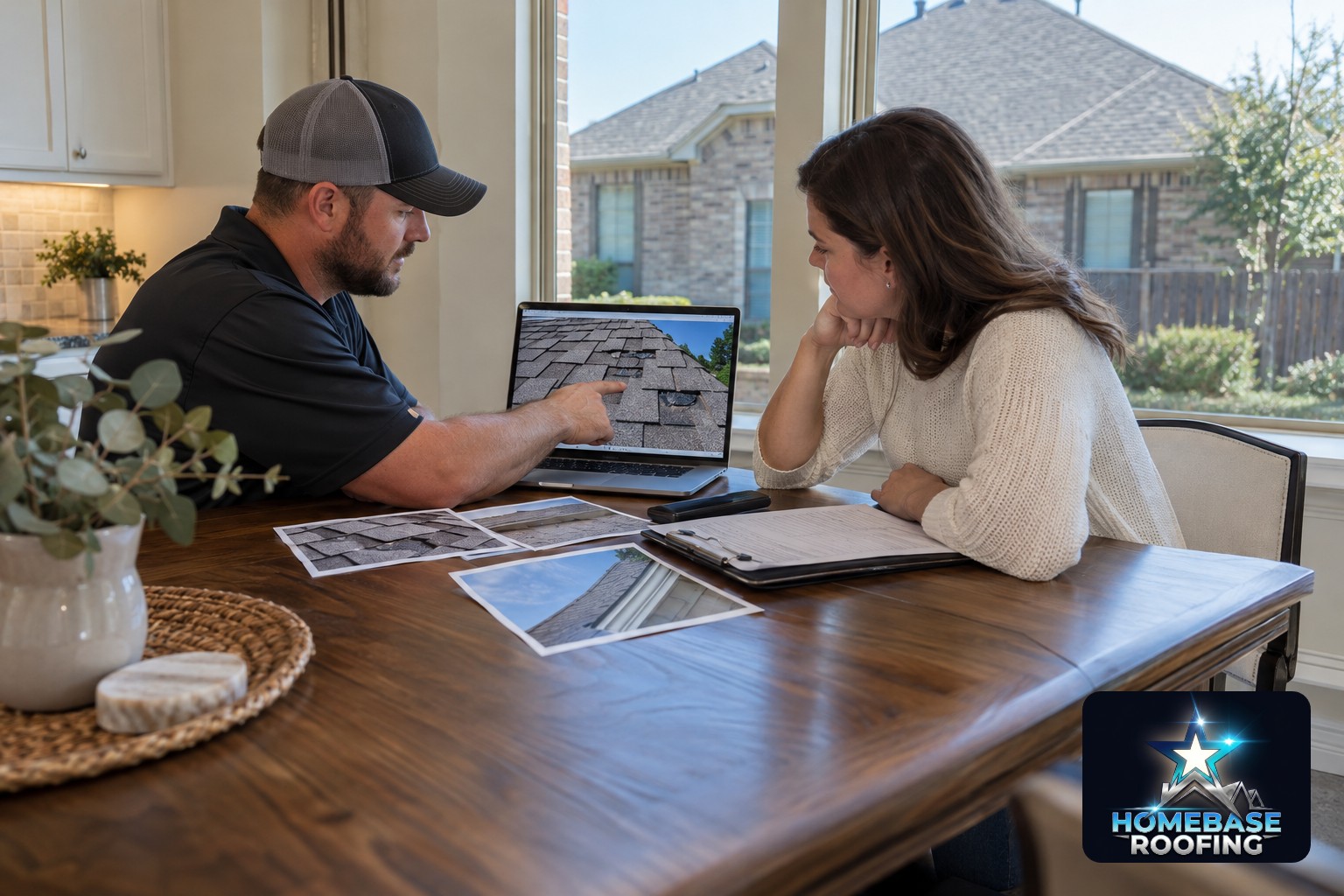
Texas insurers generally require storm claims to be reported within the deadline stated in the policy, often one year from the date of loss. Extensions or different deadlines may apply, so confirm the language in your policy instead of assuming you have more time.
For a fuller walkthrough, read our Texas roof insurance claim guide. You can also learn how Homebase Roofing approaches roof insurance claims and documentation.
Can a roofer tell you whether insurance will pay?
A roofer can document roof damage, provide measurements, explain repair requirements, and meet your adjuster. A roofer cannot decide coverage or promise what your carrier will pay.
At Homebase Roofing, we focus on the roof itself. We photograph the slopes, mark visible damage, inspect flashing and penetrations, and explain the scope line by line. That gives you useful information whether the right answer is a repair, replacement, or no immediate work.
Frequently asked questions
Does homeowners insurance cover roof leaks?
It may cover the resulting damage and roof work when a covered event caused the leak. Leaks from age, neglected maintenance, deteriorated flashing, or long-term seepage are commonly excluded.
Will insurance replace a 20-year-old roof?
It can if a covered storm caused replacement-level damage, but age may reduce payment under ACV terms or a roof schedule. The policy and documented cause of loss matter more than age alone.
Is hail damage always visible from the ground?
No. Hail bruising and fractured shingle mats can be difficult to see without inspecting the roof closely. Dented gutters or vents may suggest impacts, but they do not confirm shingle damage by themselves.
What if my policy has an ACV roof endorsement?
The carrier may calculate payment using the roof’s depreciated value rather than its full replacement cost. Review the endorsement for the depreciation method, deductible, exclusions, and any limits that apply.
Should I replace my roof before the claim is settled?
Emergency work may be needed to prevent additional water damage, but document conditions before permanent repairs whenever it is safe to do so. Ask your carrier what records it requires and keep every photo, estimate, and invoice.
Get a clear look at your roof
If a North Texas storm left you with a ceiling stain, missing shingles, or questions about hail damage, Homebase Roofing can inspect the roof and explain what we find in plain language.
Get a Free Roof Inspection. No pushy sales. If your roof’s fine, we’ll tell you and leave.

Written by
Giovanni EsotoSEO Specialist & Content Writer
Five years of SEO and content experience focused on useful, locally relevant homeowner guidance.
LinkedInReviewed for roofing accuracy by
Curtis DunnOwner & Roofing Subject Matter Expert
Homebase Roofing reviews technical roofing details for accuracy and North Texas relevance. This content is not legal, engineering, or insurance advice.
Storm season doesn't wait. Neither should your roof.
Free inspection, written report, honest verdict. We'll call you within 1 business hour — no obligation, no pressure.
No pushy sales. If your roof's fine, we'll tell you and leave.
- Licensed & insured
- 5.0 on Google
- 1-hour callback