
Hail · May 2026
What Does Hail Damage Look Like on a Roof? (Photo Guide for North Texas Homeowners)
Photos and plain-English explanations from a North Texas roofer.
Quick answer
What does hail damage look like on a roof?
Hail damage looks like round, dark spots where granules are knocked off, soft bruises that give under your thumb, and cracked or split shingles. From the ground, look for dents in gutters, vents, and downspouts, and heavy granules in your gutters.
Last reviewed by Curtis Dunn, owner & roofing reviewer
Most hail damage in Plano, Allen, and Frisco is invisible from the ground. That's the whole problem — it looks fine, so you never file, and years later you're paying out-of-pocket for a roof insurance would have covered. It's the single most common reason homeowners call us for hail damage roof repair in Plano.
What does real hail damage look like?
Bruises. Round, dark spots on shingles roughly the size of a nickel to a golf ball. The dark color is the asphalt underneath, exposed where hail knocked the protective granules loose. That granule loss is what shortens the shingle's life.
Fractures. Cracks radiating out from an impact point, sometimes only visible when the shingle is flexed.
Splits. Straight cracks along the shingle grain, often from bigger hail (quarter+ size).
How can you check for hail damage from the ground?
- Downspout splash zones. Look at the concrete or grass where your downspouts drain. Piles of dark granules the size of coarse sand = hail knocked them loose.
- Metal roof vents and turbines. Round dents in metal vents are near-proof of a significant hail event.
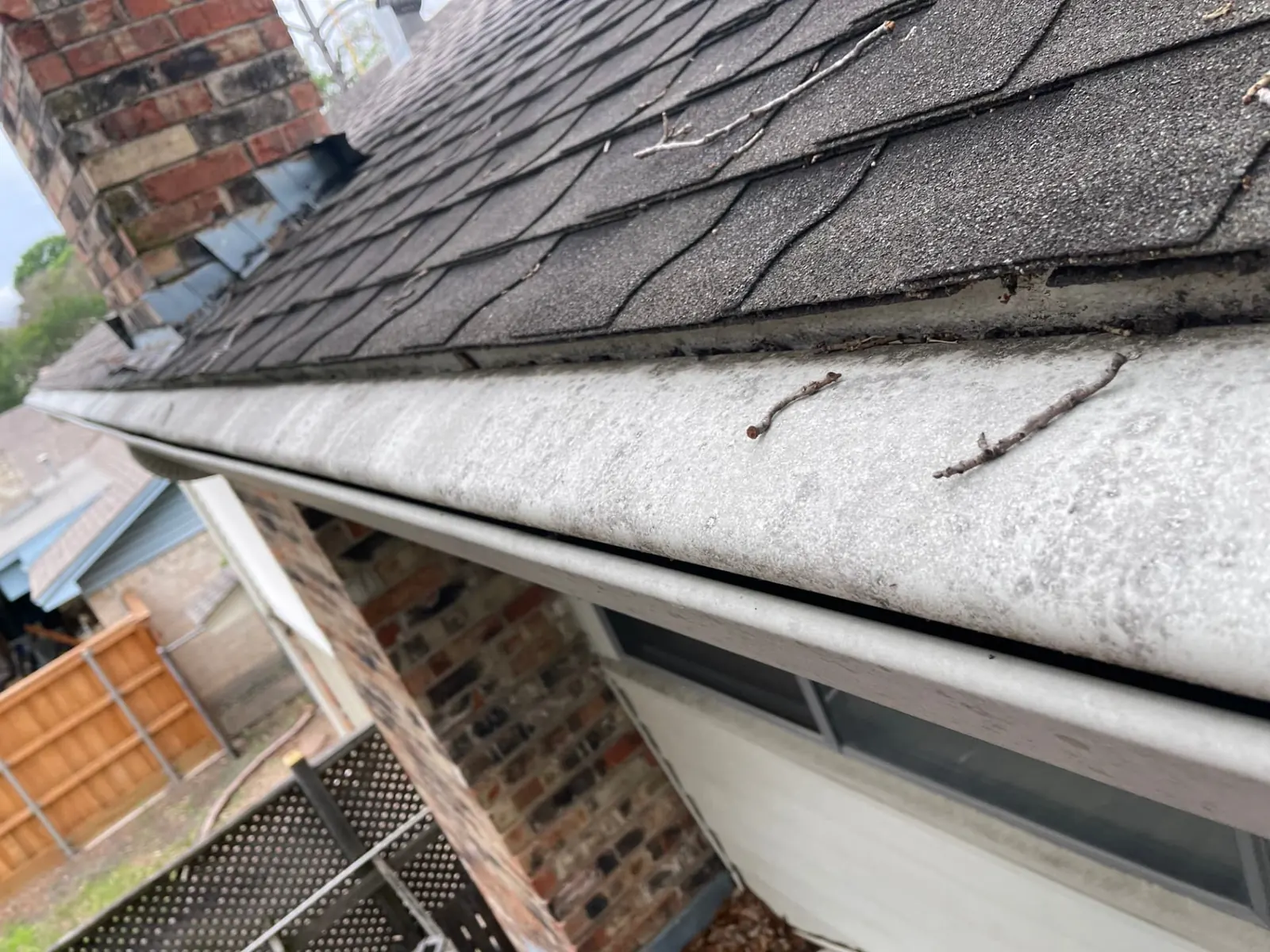
- Gutter tops. Small round dings along the top lip of your gutters.
- Window screens. Torn or shredded window screens on the storm side of the house.
- Wood fence tops and A/C fins. Splintered fence tops and bent A/C condenser fins are hail giveaways. If the same storm brought high wind or downed limbs, read up on storm damage restoration for North Texas homes too.
What hail marks are only cosmetic?
- Missing granules in a straight line = normal weathering, not hail.
- Curling or cupping shingles = age and heat, not hail.
- Black streaks = algae, purely cosmetic.
When should you call for a hail inspection?
If you saw any hail bigger than a marble during a storm, or if you notice any of the ground-level clues above, get a free roof-level inspection. Texas insurance carriers generally require you to file within one to two years of the storm date — some sooner. Waiting shortens your window. Before you decide, it helps to know what a 2026 roof replacement costs in Plano so you can weigh a claim against paying out of pocket.
Once you know damage exists, our step-by-step Texas insurance claim guide walks through filing, deadlines, and the adjuster meeting.
What happens on a free hail inspection?
- Climb the roof and inspect every slope.
- Chalk-mark hail hits so they photograph clearly.
- Photograph 40–80 images depending on roof size.
- Deliver a written verdict — damage or no damage — with photos, at no charge.
- If damage exists, we help you file the claim and meet your adjuster on-roof.

Written by
Giovanni EsotoSEO Specialist & Content Writer
Five years of SEO and content experience focused on useful, locally relevant homeowner guidance.
LinkedInReviewed for roofing accuracy by
Curtis DunnOwner & Roofing Subject Matter Expert
Homebase Roofing reviews technical roofing details for accuracy and North Texas relevance. This content is not legal, engineering, or insurance advice.
Frequently asked questions
Storm season doesn't wait. Neither should your roof.
Free inspection, written report, honest verdict. We'll call you within 1 business hour — no obligation, no pressure.
No pushy sales. If your roof's fine, we'll tell you and leave.
- Licensed & insured
- 5.0 on Google
- 1-hour callback