October 2026
Metal Roof vs. Shingles in North Texas: Heat, Hail, and Real Tradeoffs
How metal and asphalt shingles hold up to North Texas heat and hail, and which one fits your home and budget.
You need a new roof, but which material makes sense?
Maybe last night's storm left a water stain on your ceiling, or your insurance adjuster is coming Friday and you need to understand your replacement options. You are trying to decide between a metal roof and shingles without spending more than your home needs.
Here is the short answer: metal is not automatically better than shingles in Texas. A well-installed metal roof usually lasts longer and sheds heat efficiently, but quality architectural shingles remain a practical, durable choice for most DFW homes. Your budget, roof shape, hail exposure, HOA rules, and how long you expect to own the house should guide the decision.
Is metal better than shingles in Texas?
Metal can be better for some Texas homes, but shingles are often the better value.
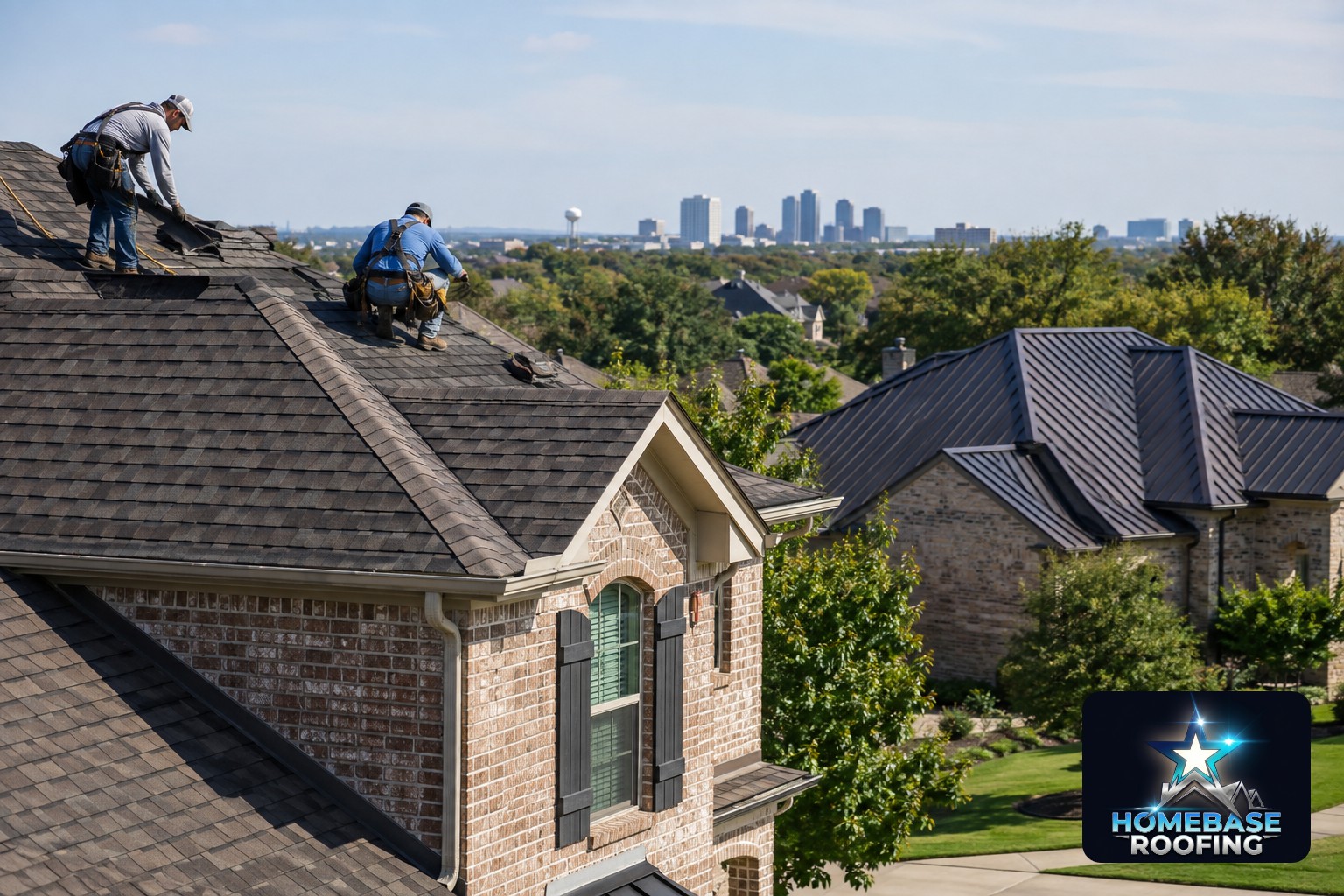
A standing-seam metal roof handles intense sun, wind, and rapid temperature changes well. Its raised seams conceal the fasteners, which helps limit common leak points. Metal also sheds water quickly and can work well on simple rooflines with enough pitch, meaning the roof's slope.
Architectural asphalt shingles cost less upfront, are easier to repair, and fit the look of most Plano, Allen, Frisco, and Richardson neighborhoods. They are also familiar to local installers, inspectors, and HOA review committees.
Here is the kitchen-table version:
- Choose metal if you expect to stay in the house for a long time, want a longer-lasting system, and can justify the higher initial cost.
- Choose architectural shingles if you want a dependable roof at a more accessible cost or expect to sell before metal's longer service life pays off.
- Consider Class 4 impact-resistant shingles if hail performance matters but a full metal system is outside your budget.
Installation matters as much as the material. Poor flashing around chimneys, walls, valleys, and pipe boots can make an expensive roof leak. Proper underlayment, ventilation, decking, and drainage still have to be addressed.
Does a metal roof dent in hail?
Yes, metal roofing can dent in hail. That does not always mean it will leak or needs replacement.
The amount of denting depends on the hailstone size, wind speed, metal thickness, panel profile, roof slope, and what sits beneath the panel. Large, wind-driven hail can leave visible dimples. Softer metals tend to show dents more readily, while heavier-gauge steel and textured panels may hide them better.
There is an important difference between cosmetic damage and functional damage. Cosmetic damage changes how the roof looks. Functional damage may split a seam, damage a coating, loosen a flashing detail, or create a path for water.
After a North Texas hailstorm, do not judge the roof from the driveway. A proper inspection should include the panels, seams, ridge, vents, flashing, gutters, and soft metals. Those softer metal surfaces can help show hail size and direction.
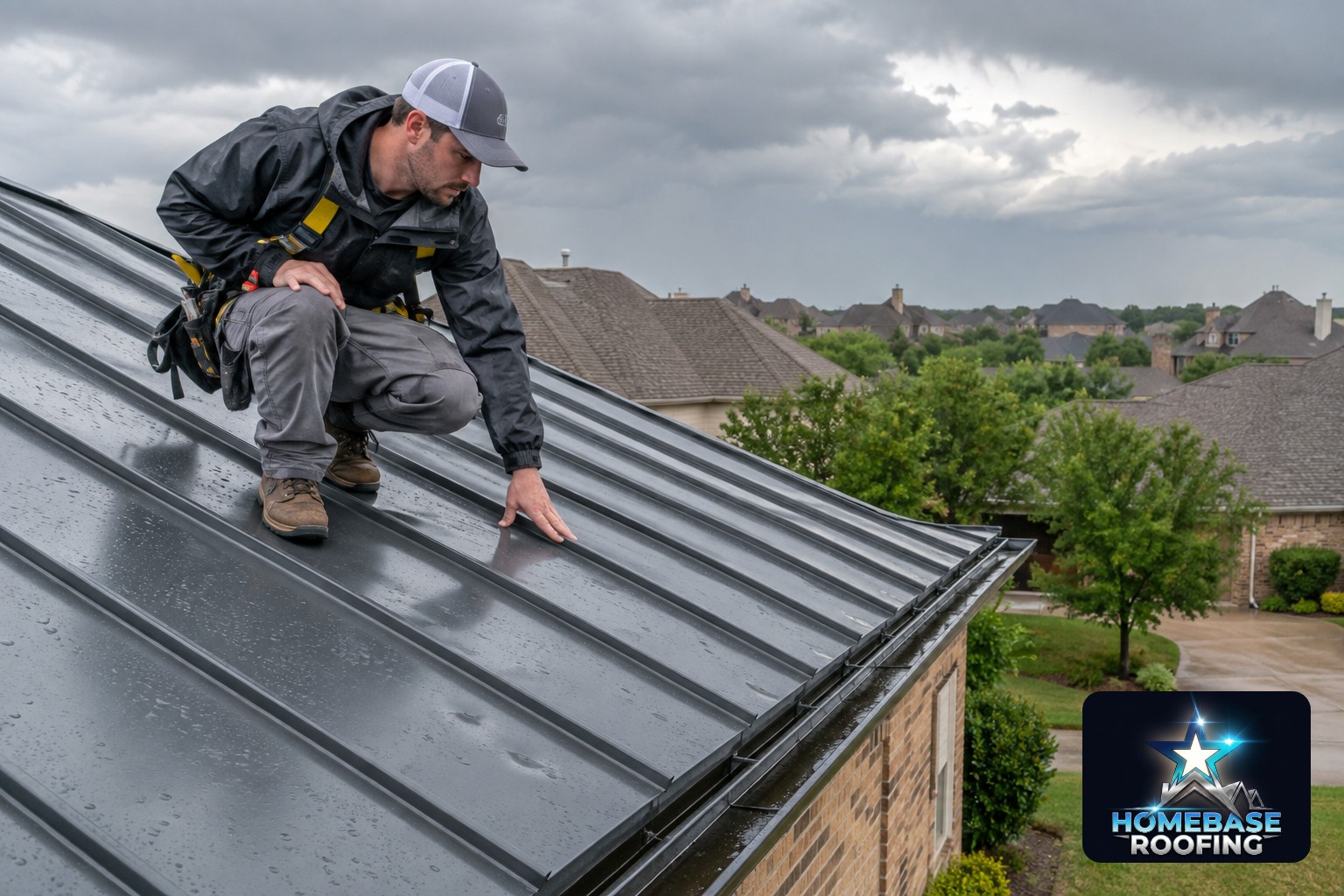
If you may need to report storm damage, remember that Texas insurers generally allow one year from the storm date to file. Policy terms can differ, so check your documents. A roofer can document damage with photographs and measurements, meet your adjuster on the roof, and explain the scope line by line without promising an outcome.
Which lasts longer in DFW heat?
A properly installed metal roof generally lasts longer than asphalt shingles in DFW heat.
Metal reflects more solar energy when it has the right finish, and it does not lose protective granules the way asphalt shingles do. It also tolerates the repeated expansion and contraction caused by hot afternoons, cooler nights, and sudden storms. The panel system must allow for that movement, or fasteners and seams can become trouble spots.
Architectural shingles can still provide a long service life when the attic is ventilated correctly and the roof receives routine maintenance. North Texas heat becomes harder on shingles when the attic traps hot air or when exhaust vents fight against powered fans and soffit intake.
Shingle age is only one part of the picture. Hail bruising, granule loss, wind uplift, exposed nails, cracked pipe boots, and poor ventilation may shorten the useful life of the roof. Our guide to how long roofs last in North Texas explains how local weather affects different systems.
How does metal roof cost compare with shingles?
A metal roof normally costs more upfront than an architectural shingle roof. The final difference depends on the metal type, panel profile, roof size, pitch, tear-off needs, decking condition, flashing details, and access around your home.
Complex Plano rooflines can increase labor. Homes built in the 1970s through the 1990s often have intersecting valleys, chimneys, low-slope transitions, and additions that need careful detailing. Alley-access properties may also require more planning for material delivery and debris removal.
Decking can change the estimate once the old roof comes off. Some North Texas homes have radiant barrier decking, which has a reflective layer facing the attic. Damaged sheets should be matched correctly rather than replaced with whatever happens to be on the truck.
Metal may provide better long-term value if you stay in the house long enough to benefit from its service life. Shingles may make more financial sense if your budget is tighter, the house has a complicated roof, or you expect to move within several years.
For a closer look at the items that shape an estimate, review our guide to roof replacement cost in North Texas. Any useful quote should explain what depends on field conditions instead of giving you one vague total.
What are the best roofing shingles for Texas?
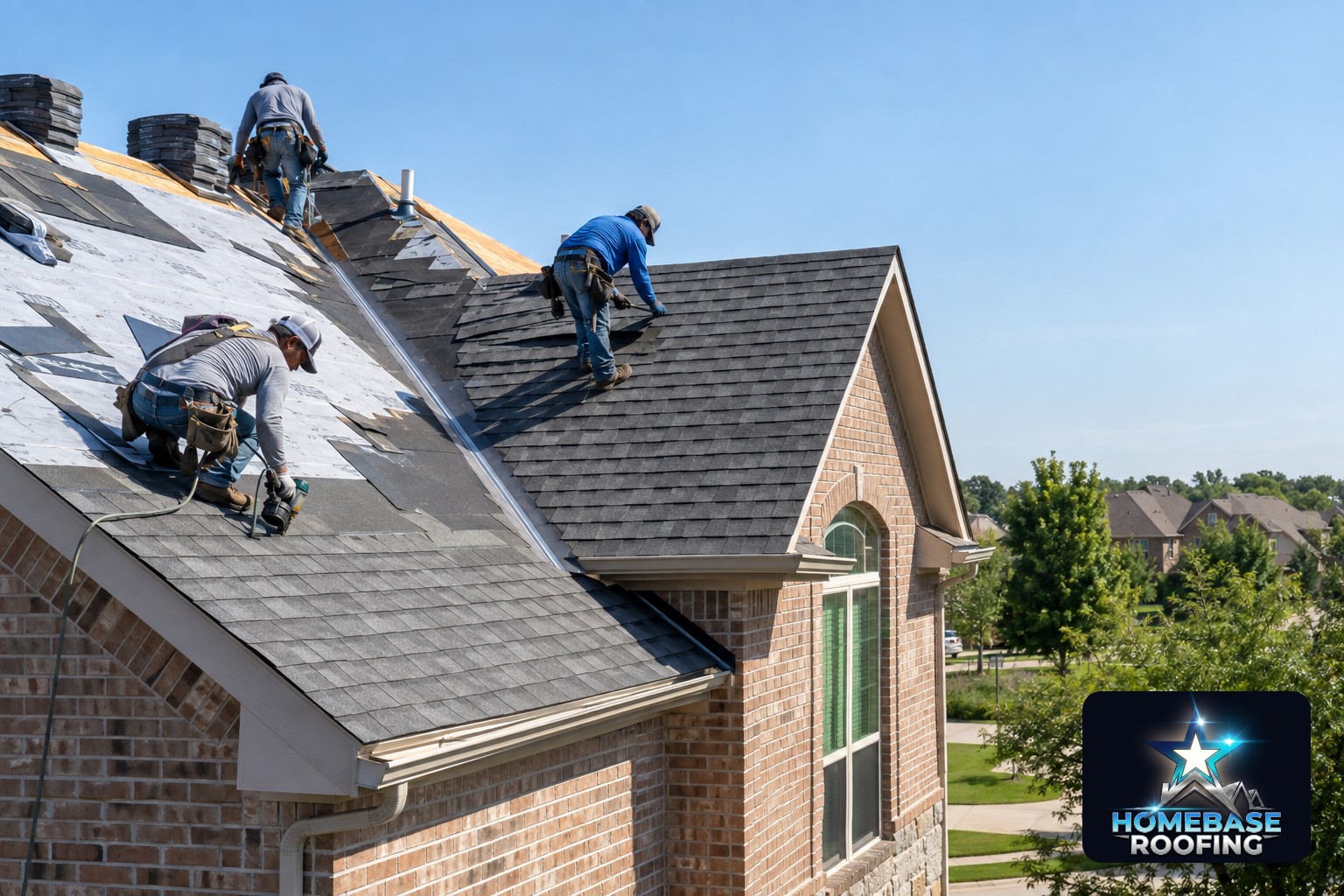
For most Texas homes, the best roofing shingles are quality architectural shingles installed as a complete system. That system includes underlayment, drip edge, starter shingles, valley protection, ridge caps, flashing, pipe boots, and balanced ventilation.
Class 4 impact-resistant shingles are worth discussing in hail-prone parts of DFW. The Class 4 designation refers to laboratory impact testing. It does not mean a shingle is hail-proof, and severe hail can still cause damage.
Look for these practical features:
- A dimensional architectural profile rather than a basic three-tab shingle
- A wind rating suitable for North Texas storms
- A strong nailing strip that helps installers place fasteners correctly
- Algae-resistant granules for shaded roof sections
- A documented manufacturer system from GAF or Owens Corning
- A workmanship warranty from the roofing contractor
Color also matters. A lighter shingle can reduce heat absorption, although ventilation and insulation usually matter more than a small color difference. Your HOA may limit available colors or require approval before work begins, particularly in planned communities around Frisco, Murphy, Parker, and McKinney.
How do local soil and weather affect the choice?
DFW's clay soil expands when wet and contracts during dry periods. That movement can affect foundations and framing, but it usually should not decide whether you choose metal or shingles. It does make careful inspection around wall transitions, chimneys, and previous additions more important.
Spring hail is the larger roofing concern. Wind-driven storms can damage either material, although the damage may look different. Shingles can show bruising and granule loss. Metal can show dents or damage around seams and penetrations.
Summer heat also exposes ventilation problems. If the attic cannot draw air through the soffits and release it near the ridge, heat and moisture stay trapped. That can shorten shingle life and increase stress on any roof assembly.
What should you choose for your home?
Start with how long you plan to stay, what your HOA allows, and what condition the roof deck is in.
Metal may be the right fit when you want maximum service life, prefer its appearance, and are comfortable with the higher initial investment. Architectural or Class 4 shingles may be the better choice when you want strong hail performance, easier repairs, and a lower upfront cost.
Before signing a contract, ask for an itemized scope covering tear-off, decking, underlayment, drip edge, ventilation, flashing, cleanup, and warranty terms. You can also review what is involved in a professional roof replacement in Plano, TX.
Get a clear answer before you decide
You do not need to choose from a brochure or guess from the driveway. Homebase Roofing can inspect your current roof, explain what is still serviceable, and compare metal and shingle options for your actual roofline.
Get a Free Roof Inspection or call (945) 298-3335. No pushy sales. If your roof's fine, we'll tell you and leave.
Written by Giovanni Esoto, SEO Specialist & Content Writer. Roofing accuracy reviewed by Curtis Dunn, Owner & Roofing Subject Matter Expert.

Written by
Giovanni EsotoSEO Specialist & Content Writer
Five years of SEO and content experience focused on useful, locally relevant homeowner guidance.
LinkedInReviewed for roofing accuracy by
Curtis DunnOwner & Roofing Subject Matter Expert
Homebase Roofing reviews technical roofing details for accuracy and North Texas relevance. This content is not legal, engineering, or insurance advice.
Storm season doesn't wait. Neither should your roof.
Free inspection, written report, honest verdict. We'll call you within 1 business hour — no obligation, no pressure.
No pushy sales. If your roof's fine, we'll tell you and leave.
- Licensed & insured
- 5.0 on Google
- 1-hour callback