
Maintenance · July 2026
How Long Does a Roof Last in North Texas? (Heat, Hail, and the Honest Answer)
The number on the wrapper and the number on your house are two different things.
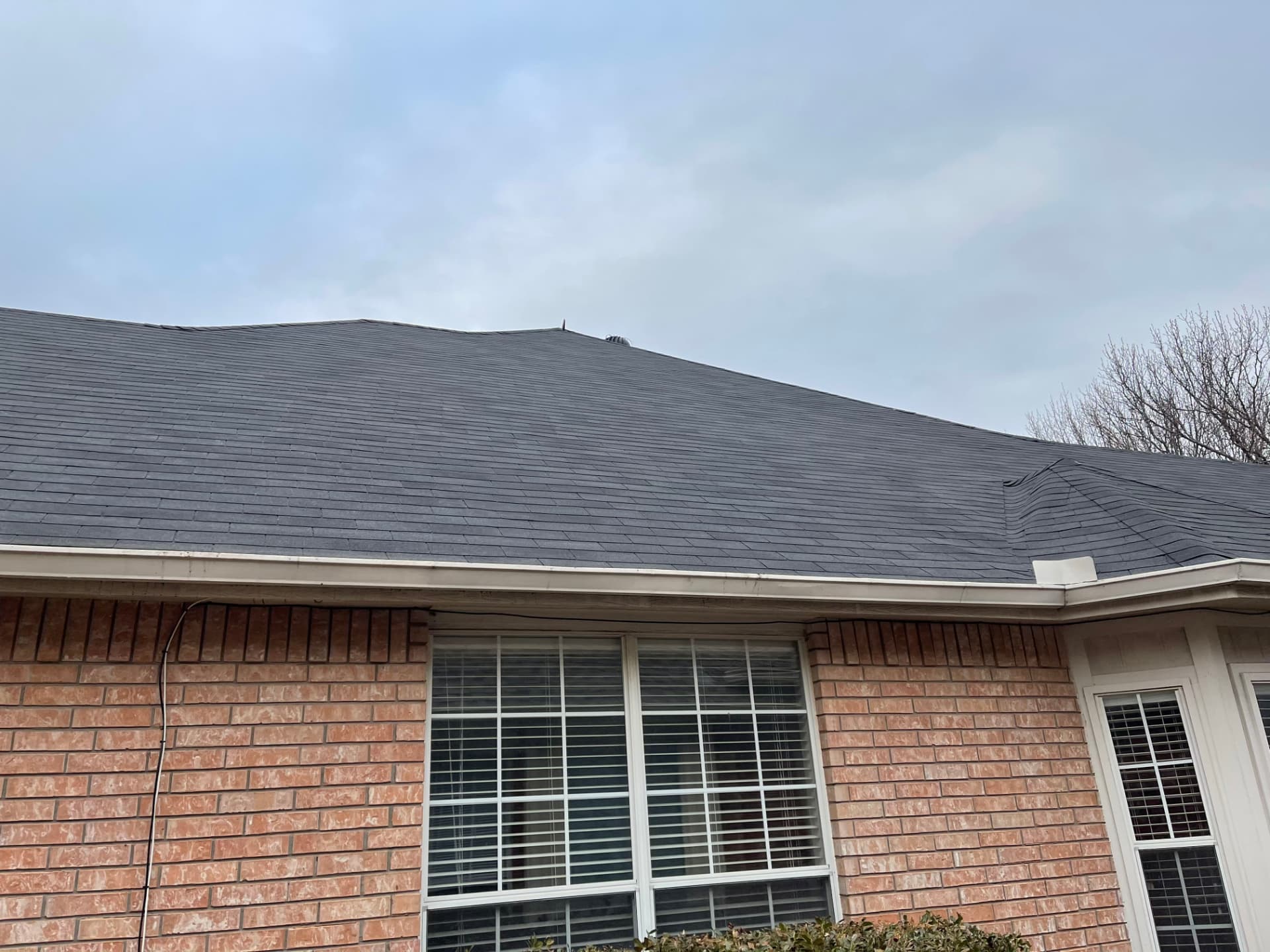
Short answer: a standard architectural shingle roof in Plano, Allen, Frisco, or McKinney realistically lasts 15 to 20 years, not the 30 printed on the bundle. Three-tab shingles run shorter, around 12 to 16. Impact-resistant Class 4 shingles run longer, often 20 to 25. Nothing here is a defect — it's what North Texas does to asphalt.
Why the warranty number and the real number differ
A "30-year shingle" is rated in a laboratory at moderate temperature with no impact events. Your roof lives somewhere else. Three things shorten it here:
- Surface heat. On a 100-degree August afternoon the shingle surface on a south or west slope hits 160 to 175 degrees. Asphalt slowly bakes out its volatile oils, the mat gets brittle, and granules stop holding. This is the single biggest factor.
- Thermal cycling. North Texas can swing 40 degrees in a day. Every cycle expands and contracts the shingle and the decking under it, working nails loose over time.
- Hail. A marble-sized storm you didn't even claim still knocked granules off. Each event takes a year or two of life with it, even when no single hit fails the shingle.
Expected life by material in Collin County
- Three-tab asphalt — 12 to 16 years. Common on homes built before 2005 and on builder-grade specs.
- Architectural (dimensional) asphalt — 15 to 20 years. The default on most homes built since 2005.
- Class 4 impact-resistant asphalt — 20 to 25 years, plus an insurance discount from most Texas carriers. This is what we recommend on a hail-claim replacement.
- Standing-seam metal — 40 to 50 years. Hail dents it cosmetically without causing leaks.
- Concrete or clay tile — 40-plus years for the tile, but the underlayment beneath it needs replacing around year 20, which is the job people forget to budget for.
- Modified bitumen or membrane on flat sections — 12 to 20 years depending on system and ponding. Common on Richardson add-ons and carports.
Not all slopes age at the same rate
This surprises people: your roof does not wear out evenly. South- and west-facing slopes take the afternoon sun and typically fail years before the north slope on the same house. North slopes stay damp and shaded, which grows algae and holds debris but keeps the asphalt cooler.
So when an inspector says the roof is "shot" but only shows you photos from one side, ask about the others. Sometimes the honest answer is a slope repair, not a replacement — that's the conversation on our Plano roof repair page.
Things that genuinely add years
- Working attic ventilation. An under-ventilated attic in Texas can run 150 degrees and cooks the shingles from below. Balanced intake at the soffit plus ridge exhaust is the cheapest life extension available.
- Keeping valleys clear. Leaf pack in a valley holds water against the deck. Clear them and the decking outlives the shingles.
- Gutters that actually carry water. Overflowing gutters rot fascia and the first shingle course. See gutter installation.
- Fixing small things early. A $200 pipe boot replaced on time prevents a $3,000 decking and drywall repair later.
- Trimming limbs back. Branches abrade granules every windy day.
How to tell where your roof is in its life
- Find the install date. Check your closing paperwork, a permit record with your city, or the previous owner's disclosure.
- Look at the downspout outflow. A pile of coarse dark granules where the downspout drains means the shingle surface is shedding.
- Look along the roof edge from the ground. Curling or cupping tabs along the rake means heat has taken the flexibility out.
- Check the attic after rain. Dark stains on decking or damp insulation means water is already getting in somewhere.
- Count storms. If your roof has been through 2021 and 2024 hail without ever being inspected, its age on paper is optimistic.
Replace at the end of life, or wait for a claim?
This is the real decision, and it's worth being blunt. If your roof is 18 years old with no storm damage, insurance will not pay for it — age is not a covered loss, and filing anyway just puts a denied claim on your record. Plan the purchase instead: our published ranges are on the 2026 roof replacement cost page, and roof financing spreads it out.
If your roof is 12 to 20 years old and a storm has come through, that's a different situation entirely, and documentation decides it. Start with how to spot hail damage from the ground, then the Texas insurance claim guide.
Get the real age assessed for free
We'll tell you how many years you have left, slope by slope, in writing — including when the answer is "you're fine, see you in five years." Book a free roof inspection or call (945) 298-3335. We cover Plano, Allen, Frisco, McKinney, and the rest of our service area.

Written by
Giovanni EsotoSEO Specialist & Content Writer
Five years of SEO and content experience focused on useful, locally relevant homeowner guidance.
LinkedInReviewed for roofing accuracy by
Curtis DunnOwner & Roofing Subject Matter Expert
Homebase Roofing reviews technical roofing details for accuracy and North Texas relevance. This content is not legal, engineering, or insurance advice.
Storm season doesn't wait. Neither should your roof.
Free inspection, written report, honest verdict. We'll call you within 1 business hour — no obligation, no pressure.
No pushy sales. If your roof's fine, we'll tell you and leave.
- Licensed & insured
- 5.0 on Google
- 1-hour callback